

A boiler ignition lockout can occur at the worst possible time, like in the depths of winter or when you’re about to run the kids’ baths. You can safely do some checks and fixes at home, but some lockouts usually require a Gas Safe engineer.
Gas Safety Warning: If you can smell gas, don’t attempt to investigate or reset your boiler. Turn off your gas supply at the meter, open windows and doors, avoid all electrical switches, and leave the property. Call the National Gas Emergency Service on 0800 111 999. This line is free and available 24 hours a day.
According to the UK government’s independent advisory body, the Committee on Climate Change (CCC), around 85% of UK homes are connected to the gas grid and rely on boilers with wet central heating systems. When one stops working, it’s not a minor inconvenience. It can quickly mean cold radiators, chilly mornings, and a race to boil kettles for hot water.
If you’ve tried firing up your boiler several times and it still refuses to cooperate, there is a strong chance it’s in ignition lockout mode. This built-in safety feature shuts the boiler down after failed ignition attempts to help prevent damage and ensure it doesn’t operate under unsafe conditions, such as gas leaks. Some boiler lockout causes are straightforward, such as low pressure, a frozen condensate pipe, thermostat settings, or a temporary interruption to the gas supply.
A boiler ignition lockout is one of the most common boiler problems in the UK. Exploring what causes it, which checks you can safely perform yourself, and when it’s time to call a professional saves you both time and money. Not every lockout requires an engineer, but knowing the difference between a DIY fix and a Gas Safe job is important, particularly when gas components are involved.
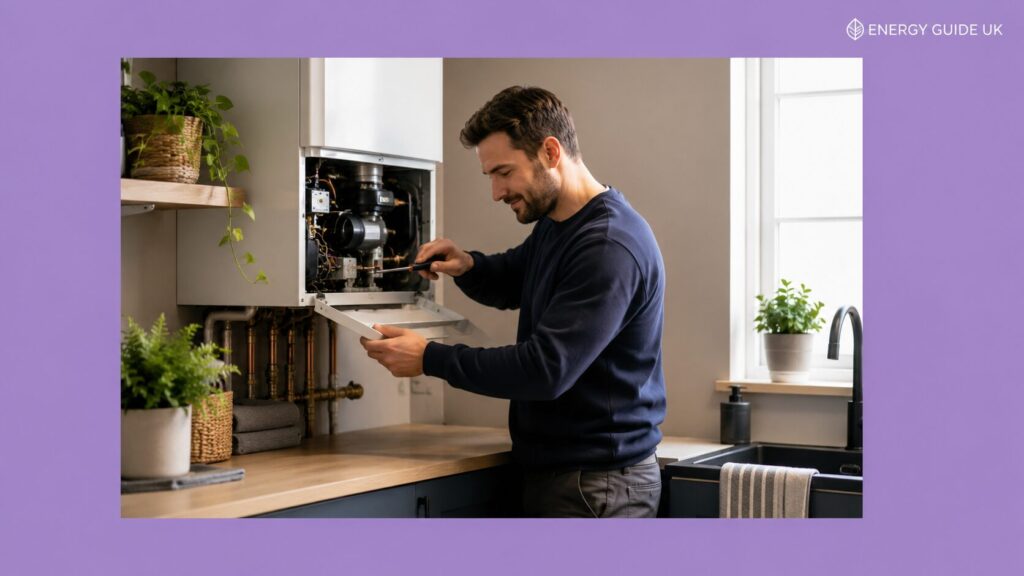
Key Takeaways on Boiler Ignition Lockout:
- A boiler ignition lockout occurs when your boiler fails to ignite and shuts down as a safety precaution.
- Low boiler pressure, gas supply interruptions, frozen condensate pipes, and faulty ignition components are among the most common causes.
- You can safely check boiler pressure, thermostat settings, timer settings, electrical supply, and gas meter credit at home.
- Avoid repeatedly pressing the reset button. Frequent lockouts often point to a deeper fault.
- Different boiler brands use different fault codes, including Ideal L2, Worcester Bosch EA, and Vaillant F28 or F29.
- Persistent ignition lockouts usually require a Gas Safe engineer, particularly where gas valves, flame sensors, or internal components are involved.
- Fast action can prevent a small issue from turning into a larger repair bill or leaving you without heating for longer.
What Is a Boiler Ignition Lockout?
A boiler ignition lockout is a built-in safety mechanism, not a fault in itself. Your boiler detects a problem that either prevents it from operating correctly or makes it unsafe to continue running. It shuts itself down automatically to prevent damage to internal components or a more serious safety risk. It won’t restart until the fault is identified, addressed, and the boiler is manually reset.
The lockout exists because a boiler that keeps attempting to ignite despite a problem, such as a blocked flue, an interrupted gas supply, or a failed flame sensor, can cause real damage. The lockout stops that process before it escalates.
Boiler Ignition Lockout vs a Soft Shutdown
A lockout and a soft shutdown look similar from the outside but behave differently. A soft shutdown is a temporary pause when the boiler detects a minor condition. It stops briefly and restarts automatically once the condition passes. You may not even notice it. A lockout requires your intervention.
The boiler will not attempt to restart on its own. It waits for you to identify the fault, address it, and manually reset the unit. If your boiler has stopped and won’t restart without you pressing the reset button, you’re dealing with a lockout, not a soft shutdown.
Why Resetting Without Fixing the Fault Doesn’t Work
This is the most important thing to understand about a boiler ignition lockout. Pressing reset clears the error state temporarily, but it doesn’t fix the underlying fault. If the fault persists, the boiler will lock out again immediately after the startup sequence, sometimes within seconds.
Repeated resets on a boiler with an unresolved fault can damage internal components, particularly the ignition electrode and PCB, as the boiler cycles unnecessarily each time it attempts to start. One reset, once the cause has been addressed, is the correct approach. If the boiler locks out again, stop resetting and call a Gas Safe registered engineer.
How to Recognise a Boiler Ignition Lockout
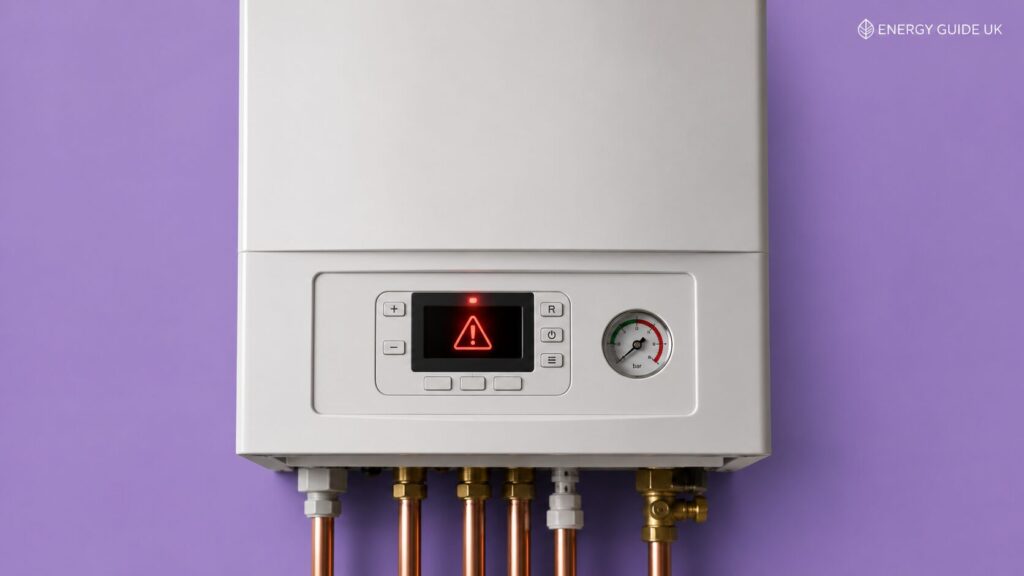
The first sign is your boiler failing to fire up. Beyond that, your boiler communicates what’s wrong via a fault code on the display panel or indicator lights on older models. Reading those signals correctly is the fastest way to identify the cause and determine whether you can fix it yourself or need an engineer.
Boiler Fault Codes for Ignition Lockout
Modern boilers display a fault code on the digital panel when they enter lockout. The code is usually a combination of letters and numbers that points directly to the fault category the boiler has detected. Ignition-specific codes across the most common UK boiler brands look like this:
| Brand | Ignition Lockout Code | Meaning |
| Worcester Bosch | EA 227 / 227 | Ignition failure — failed to detect flame after attempted ignition |
| Vaillant | F28 | Ignition failure — no flame detected after ignition attempt |
| Ideal | L2 | Ignition lockout — flame lost or failed to ignite |
| Baxi | E1 28 | Ignition fault — burner failed to light |
| Viessmann | F4 | Ignition fault — no flame signal detected |
These codes are starting points, not definitive diagnoses. The same code can result from several different underlying causes, such as a gas supply interruption, a faulty flame sensor, a frozen condensate pipe, or a PCB fault, all of which can produce an ignition failure code. The code tells you the boiler couldn’t ignite, but the cause still needs to be diagnosed.
Always check your boiler’s manual for the specific codes that apply to your model. Codes vary between models within the same brand. If you no longer have the manual, most manufacturers publish them on their websites; search for your boiler make and model number.
Indicator Lights on Older Boilers
Boilers installed before 2010 often don’t have a digital display. They communicate through coloured indicator lights instead. While patterns vary by model and manufacturer, the following is a general guide:
- Red light flashing — the boiler has detected a fault and is in lockout. The boiler won’t restart without a manual reset.
- Red light steady — the boiler has locked out and may be waiting for a reset, or in some models, indicates a more serious fault requiring an engineer.
- Green light flashing — the boiler is in a normal operating or standby cycle.
- No lights at all — check the power supply. A boiler with no indicator lights may have lost power, tripped a circuit breaker, or blown a fuse, rather than entered lockout.
If your older boiler has no fault code display and the indicator light pattern doesn’t match the above, consult the manual or search online for your specific model’s light sequence guide.
The Clicking Sound Signal
A boiler attempting to ignite but failing will often produce a repeated clicking sound as the ignition electrode sparks repeatedly without the burner lighting. This clicking, combined with no heat output and no flame visible through the inspection window (where fitted), is a strong indicator of an ignition-specific lockout rather than a pressure or thermostat fault. If you hear clicking followed by the boiler shutting down completely, the boiler has attempted ignition, failed to detect a flame, and entered lockout.
Check out an example of checking for a boiler ignition lockout in the video below:
What Causes a Boiler Ignition Lockout?
Gas Supply Problem
If your boiler can’t detect a gas supply, it won’t attempt to ignite. Before assuming the problem is in the boiler, check whether other gas appliances in your home, such as the hob, oven, or gas fire, are working normally. If they’re not, the issue is with your gas supply rather than your boiler. Check whether your gas meter is showing a fault or whether your prepayment meter has run out of credit. If you suspect a gas supply failure, call your gas supplier’s emergency line.
If other gas appliances are working normally, the issue is likely boiler-specific. This can be a gas valve fault or a problem with the gas pressure reaching the boiler’s internal components. Neither of these is a DIY repair. Don’t attempt to investigate the gas valve yourself. Call a Gas Safe-registered engineer.
Low Boiler Pressure
Many boilers refuse to fire when system pressure drops below 1 bar, treating low pressure as an unsafe condition and entering lockout. Check the pressure gauge on the front of your boiler. It should read between 1 and 1.5 bar when the system is cold. If it reads below 1, the system needs to be repressurised through the filling loop.
Repressurising is one of the few boiler jobs you can carry out safely yourself. Your boiler’s manual will show you where the filling loop is and how to use it. Once you’ve brought the pressure back into the correct range, reset the boiler once. If pressure drops again within days or weeks, there’s likely a leak in the system. A Gas Safe engineer needs to find and fix the source rather than simply topping up the pressure repeatedly.
Frozen Condensate Pipe
A frozen condensate pipe is the most common cause of boiler ignition lockout in winter. The condensate pipe carries acidic wastewater from the boiler to an external drain. In cold weather, water in the pipe can freeze and block it, triggering a backpressure fault and entering lockout.
The symptoms are typically a gurgling or bubbling sound from the boiler, an ignition-specific fault code on the display, and a visibly frosted or iced external pipe. This is the one lockout that most homeowners can fix themselves, and the fix takes less than 10 minutes.
Faulty Flame Sensor
The flame sensor, also called the ionisation probe, detects whether the burner has successfully lit. It does this by measuring a small electrical current through the flame itself. If the sensor is dirty, corroded, or faulty, the boiler may ignite successfully but immediately shut down because the sensor can’t confirm the flame is present.
The key symptom that distinguishes a flame sensor fault from other ignition causes is timing. The boiler fires briefly; you may hear the burner light and feel a brief blast of heat, and then it cuts out within a few seconds, repeating this sequence before entering lockout. This is different from a boiler that fails to ignite at all. A dirty sensor can sometimes be cleaned during a service, but a corroded or faulty one needs replacing, and neither is a DIY repair.
Ignition Electrode Fault
The ignition electrode is a separate component from the flame sensor. Its job is to produce the spark that lights the gas at the burner. If the electrode is cracked, worn, incorrectly gapped, or its ceramic insulator is damaged, the spark may not be strong enough or correctly positioned to light the gas, even if the gas supply, pressure, and everything else are normal.
The distinguishing symptom of an electrode fault is a clicking sound. You’ll hear the boiler attempting to spark, such as repeated clicking, but the burner won’t light at all. There’s no brief flame then a shutdown; just repeated ignition attempts, then lockout. An electrode fault isn’t a DIY repair. A Gas Safe engineer can inspect, clean, reposition, or replace the electrode depending on the condition found.
Fan and Air Pressure Switch Fault
Before your boiler attempts to ignite, the fan must run and prove it’s moving air safely through the flue. This proof is provided by the air pressure switch, which closes when it detects the correct airflow from the fan. If the fan fails to start, runs too slowly, or the air pressure switch doesn’t detect sufficient airflow, the boiler’s control board won’t send the ignition signal. The burner simply won’t light.
The symptom here is distinctive: the boiler makes no ignition attempt at all. There’s no clicking, no brief flame, and no heat output, just silence followed by a fault code and lockout. In some cases, you may hear the fan struggling or not starting at all. A blocked flue can produce the same result, so checking that the flue outlet is clear of obstructions is worth doing before calling an engineer, particularly in winter when bird nesting material or ice can block it. If the flue is clear and the boiler still won’t attempt ignition, the fan or air pressure switch needs professional assessment.
Printed Circuit Board Fault
The PCB is the boiler’s control board. It receives signals from all sensors and components in the system and coordinates the ignition sequence. If the PCB develops a fault, it may fail to send the ignition signal, misread sensor inputs, or interpret a normal reading as a fault condition, unnecessarily entering lockout.
PCB faults are the hardest to diagnose because they can produce symptoms that mimic those of other causes. A Gas Safe engineer will typically check the gas supply, pressure, flame sensor, electrode, and fan before concluding the PCB is the problem. It’s usually the last thing ruled out rather than the first.
PCB replacement is expensive, typically £300 to £500 on parts alone, and on an older boiler, it’s worth considering whether replacement of the boiler makes more financial sense than a costly PCB repair.
Thermostat or Timer Not Calling for Heat
This isn’t technically an ignition lockout, but it produces identical symptoms, and the boiler won’t fire. Before investigating any of the above causes, check that your thermostat is set above the current room temperature and that your programmer or timer is set to an active heating period.
A thermostat in frost protection mode, a programmer that’s been reset after a power cut, or a smart thermostat that’s lost its connection will all prevent the boiler from firing without any fault or lockout being present.
Check out our quick fix guides for boiler ignition faults, boiler PCB faults, faulty diverter valves, and boiler timer issues.
How to Thaw a Frozen Condensate Pipe and Fix Your Boiler Ignition Lockout
You can fix a frozen condensate pipe yourself at home without a Gas Safe engineer, and it costs nothing beyond a kettle of water that’s had a few minutes to cool.
How to Identify a Frozen Condensate Pipe
The condensate pipe is a small white plastic pipe, typically 21.5mm in diameter, that runs from your boiler to an external drain, an internal waste pipe, or a soakaway. On most installations, part of this pipe runs outside the property, making it vulnerable to freezing when temperatures drop below zero.
Look for these signs before attempting to thaw:
- Your boiler is displaying an ignition lockout fault code, and you’ve ruled out gas supply and pressure issues
- You can hear a gurgling or bubbling sound from inside the boiler
- The external section of the condensate pipe is visibly frosted, iced, or has a blockage of ice at the outlet
- The lockout has occurred overnight or during a cold spell
If you can see ice on the pipe or hear gurgling, a frozen condensate pipe is almost certainly the cause.
How to Thaw a Frozen Condensate Pipe
Step 1 — Locate the frozen section
Trace the condensate pipe from the boiler to the outside of the property. The frozen section is usually at the most exposed external point. This can be the end of the pipe, a bend, or the longest exposed outdoor run. You may be able to see frost or ice on the outside of the pipe.
Step 2 — Boil a kettle and let it cool slightly
Don’t pour boiling water directly onto the pipe. Boiling water can crack or split the plastic pipe, turning a simple fix into a plumbing repair. Let the water cool for 2 to 3 minutes after boiling, and it should feel very hot, but not scalding. Alternatively, fill a hot water bottle and place it against the frozen section.
Step 3 — Apply the warm water to the frozen section
Pour it slowly and steadily along the frozen section of the pipe, starting at the most accessible point. Work along the length of the frozen area. If using a hot water bottle, hold it in place for five to ten minutes.
Step 4 — Check for flow
Once you’ve applied the warm water, look at the end of the condensate pipe outlet. You should see a trickle of liquid beginning to flow freely. This confirms the blockage has cleared.
Step 5 — Reset the boiler once
With the condensate flowing freely, go back inside and reset the boiler according to your model’s instructions. Wait for the startup sequence to complete. If the boiler fires up and stays running, the fix has worked.
Step 6 — If it locks out again, stop
A second lockout after thawing means either the pipe isn’t fully cleared, or the fault isn’t the condensate pipe at all. Don’t reset a third time. Call a Gas Safe-registered engineer to diagnose the correct cause.
How to Prevent the Condensate Pipe Freezing Again
You can use foam pipe lagging, available from any DIY or plumbing merchant for a few pounds. It’s fitted around the external run of the condensate pipe, significantly reducing the risk of freezing during future cold spells. It’s a ten-minute DIY job that prevents a repeat lockout, even on the coldest night of the year.
Where possible, the condensate pipe should be routed internally for as much of its length as possible, with only a short external run to the drain. If your existing installation has a long external run that freezes repeatedly, a Gas Safe engineer can reroute the pipe internally during the next service visit.
How to Reset Your Boiler After an Ignition Lockout
Before you reset your boiler, address the fault that caused the lockout. If you reset without fixing the underlying problem, the boiler will enter lockout again immediately, and repeated resets can damage internal components. One reset, after you’ve resolved the cause, is the correct approach. If it locks out a second time, stop resetting and call a Gas Safe registered engineer.
General Reset Steps
The reset process is broadly similar across most modern gas boilers, though the button location and appearance vary by brand and model:
1. Identify the fault code on the display and confirm you’ve addressed the cause before proceeding.
2. Locate the reset button. It’s usually on the front control panel. It may be labelled Reset, show a flame symbol with a cross through it, or be indicated in the manual. On some models, it’s a physical button; on others, it’s a menu option accessed through a dial or touchscreen.
3. Press and hold the reset button for three to ten seconds, depending on your model. You should hear the boiler begin its startup sequence, such as a fan spinning up, then an ignition attempt.
4. Wait for the startup sequence to complete. This can take up to three minutes on some models. Don’t press reset again during this period.
5. Check for heat output. Turn a radiator on or run a hot tap to confirm the boiler has returned to normal operation.
6. If it locks out again, stop. Call a Gas Safe-registered engineer. Don’t attempt a third reset.
How to Reset a Worcester Bosch Boiler After Ignition Lockout
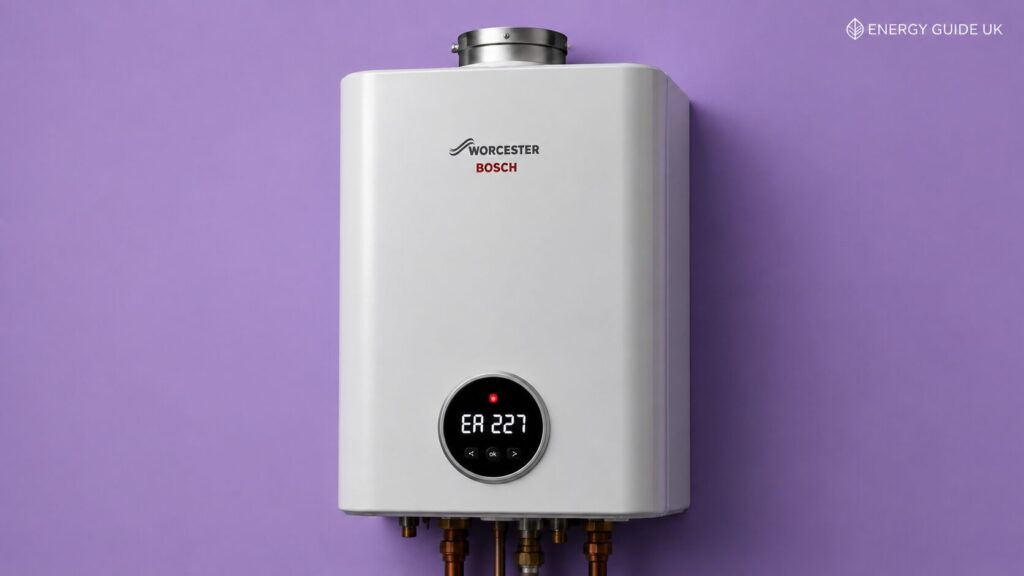
Worcester Bosch Greenstar boilers display the fault code EA 227 or 227 for ignition lockout. Once you’ve addressed the cause, locate the reset button on the right side of the control panel. It’s usually marked with a flame symbol or the word Reset.
Press and hold it for approximately three seconds until the boiler begins its startup sequence. Some newer Greenstar models have a digital menu where the reset option appears on screen alongside the fault code. If yours does, follow the on-screen prompt rather than looking for a physical button.
How to Reset a Vaillant Boiler After Ignition Lockout
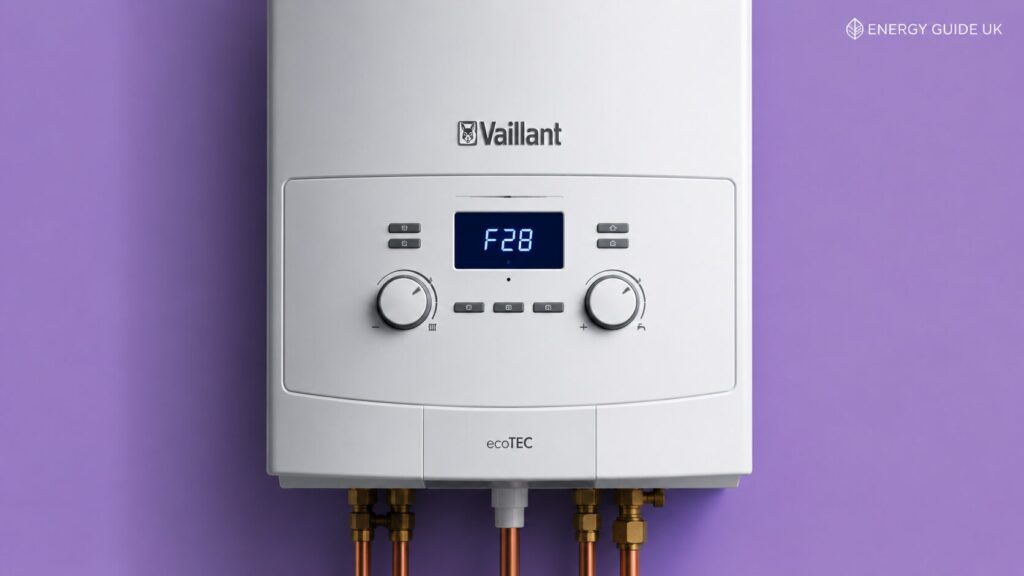
Vaillant ecoTEC boilers display F28 for ignition failure. The reset button is typically marked with a flame symbol with a cross through it and is located on the front control panel.
Press and hold it for approximately three seconds. The boiler will display the fault code during the startup attempt. If F28 reappears immediately, the underlying fault hasn’t been resolved, and a further reset won’t help. Call a Gas Safe engineer at that point.
How to Reset an Ideal Boiler After Ignition Lockout
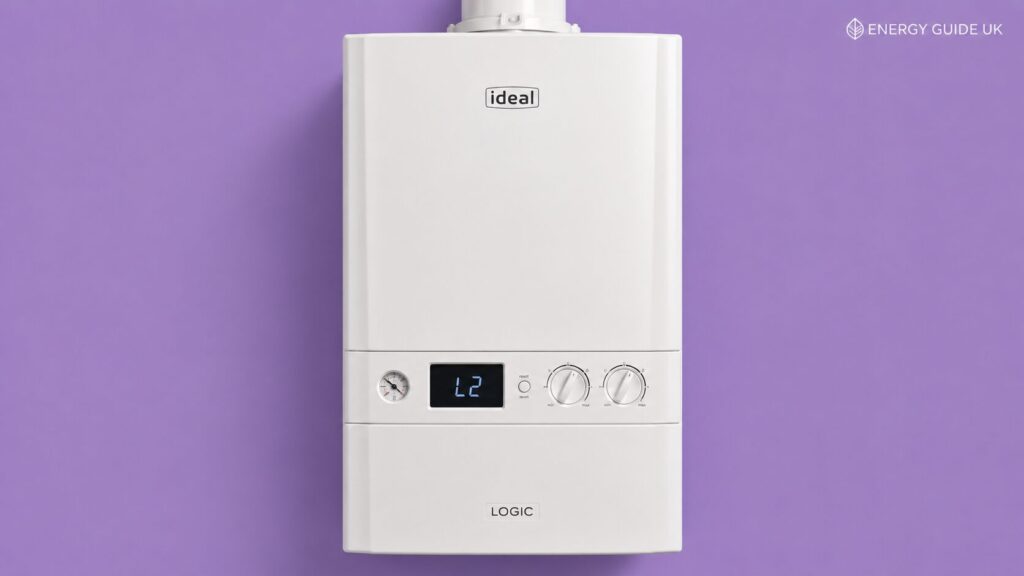
Ideal Logic and Vogue boilers display the L2 fault code, meaning ignition lockout. The reset button is usually red and located on the front panel.
Press and hold it for approximately three seconds. The L2 code should clear as the boiler attempts to restart. If L2 returns within seconds of the reset, the fault, most commonly a gas supply issue, faulty flame sensor, or frozen condensate pipe, needs to be diagnosed before the boiler runs normally.
How to Reset a Baxi Boiler After Ignition Lockout
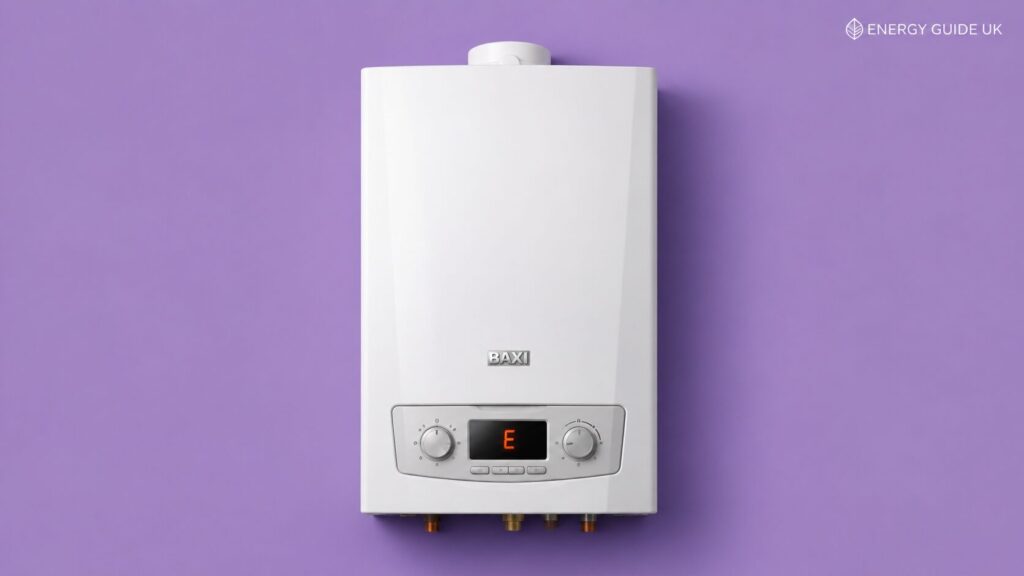
Baxi boilers typically display an E error code for ignition faults. The specific number varies by model, so check your manual for the exact code. The reset button is usually on the central control panel.
Press and hold it for approximately three seconds. If the error code reappears immediately, the ignition fault hasn’t been resolved. Baxi’s own website provides model-specific reset instructions if your manual isn’t available.
How to Reset a Viessmann Boiler After Ignition Lockout
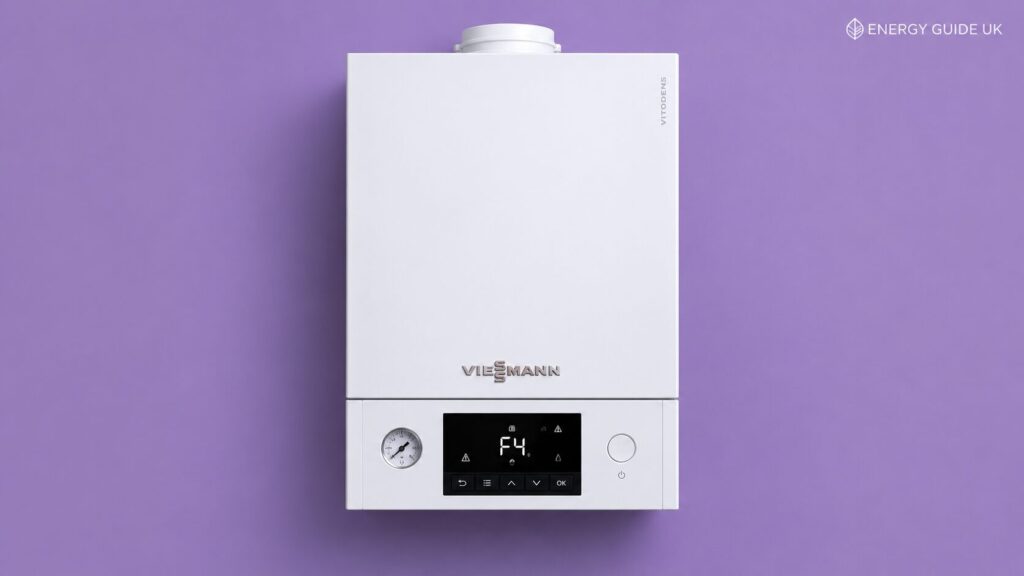
Viessmann Vitodens boilers display fault code F4 for ignition failure. The reset is accessed through the boiler’s control panel. On most Vitodens models, pressing and holding the operating mode button for approximately three seconds initiates the reset sequence. Viessmann’s manual for your specific model will confirm the exact procedure, as the control interface varies across the range.
What You Can Safely Check Yourself Before Calling an Engineer
Knowing exactly which checks are safe to carry out at home saves you the cost of an unnecessary callout. Knowing which are not prevents a potentially dangerous attempt on gas components that must only be touched by a Gas Safe registered professional.
Safe DIY Checks
- Check the gas supply. Turn on a gas appliance elsewhere in the home. If they’re working normally, your gas supply is fine, and the issue is specific to the boiler. If they’re not working, your gas supply may be interrupted. Check your meter for a fault code and contact your gas supplier.
- Check the boiler pressure. Look at the pressure gauge on the front of your boiler. It should read between 1 and 1.5 bar when the system is cold. If it reads below 1, repressurise through the filling loop using your boiler’s manual for guidance. A single reset after repressurising is appropriate.
- Check the condensate pipe in cold weather. If temperatures have dropped below zero overnight, trace the condensate pipe from the boiler to its outdoor outlet and look for visible ice or frost. If the pipe is frozen, thaw it before attempting a reset.
- Check the thermostat and timer. Confirm the thermostat is set above the current room temperature and the programmer is set to an active heating period. A thermostat in frost protection mode, or a programmer reset after a power cut, will prevent the boiler from firing without a fault.
- Check the flue outlet. Go outside and look at the flue outlet, or the point where exhaust gases leave the property. Check it’s clear of visible obstructions such as leaves, a bird’s nest, or ice. A blocked flue prevents the fan from providing airflow, and it stops the boiler from attempting to ignite.
- Check the fault code. Look up the fault code on the boiler’s display in your manual. Some codes point directly to causes you can address yourself, such as low pressure, condensate, or a gas supply issue. Others point to components that require a Gas Safe engineer, even if they may sound straightforward.
When Does a Boiler Ignition Lockout Need a Gas Safe Engineer?
Call a Gas Safe registered engineer if any of the following apply:
- The boiler locks out again immediately after a single reset
- The fault code points to an ignition electrode, gas valve, flame sensor, fan, air pressure switch, or PCB fault
- You can hear the boiler clicking repeatedly, but the burner won’t light at all
- You can hear the boiler light briefly, then it cuts out within seconds
- The flue outlet is clear, but the boiler still won’t attempt ignition
- The same lockout keeps recurring with different causes each time, or the same cause repeatedly within a short period
- You can smell anything unusual from the boiler, flue, or surrounding area
Never attempt to open the boiler casing or to investigate the gas components, ignition electrode, flame sensor, or PCB yourself. The HSE emphasises that businesses and operatives must be on the Gas Safe Register to legally undertake gas work in the UK.
Working on gas components without Gas Safe registration is illegal and dangerous. The repair cost of engaging a qualified engineer is always lower than the consequences of an incorrect DIY repair on a gas appliance.
What Does a Boiler Ignition Repair Cost in 2026?
Here is what you can typically expect to pay for ignition-related faults in 2026:
| Repair Type | Typical Cost (Including Labour) |
| Standard callout fee | £60 to £120 |
| Labour rate | £60 to £100 per hour |
| Ignition electrode replacement | £150 to £220 |
| Flame sensor clean or replacement | £100 to £200 |
| Fan replacement | £250 to £400 |
| Gas valve replacement | £180 to £450 |
| PCB replacement | £300 to £500 |
| Emergency out-of-hours callout | £120 to £450 (callout fee alone) |
| Average boiler repair (all faults) | £300 |
Boiler repairs typically range from £100 to £500, though complex jobs may cost more. Emergency out-of-hours callouts average around £410, often before the cost of parts. If you’re facing a PCB replacement on a boiler that’s over 12 years old, it’s worth getting a replacement quote alongside the repair quote to compare the two on a total-cost basis.
How to Find a Gas Safe Registered Engineer
Search for a Gas Safe registered engineer in your area at the Gas Safe Register. Every Gas Safe engineer carries a photo ID card showing their registration number and the types of gas work they’re qualified to carry out. Always ask to see it before allowing anyone to work on your boiler.
Getting two or three quotes for non-emergency repairs is always sensible. For an emergency callout in winter, verify registration first and prioritise speed, but still confirm the engineer is Gas Safe registered before they start any work.
Check out our best boiler brand guide and the best combi boiler models currently available.
How to Prevent Boiler Ignition Lockout in Future
A boiler ignition lockout is rarely a one-off event on an older or poorly maintained system. Once you’ve had one, the most valuable thing you can do is address the conditions that made it possible.
Book an Annual Gas Safe Boiler Service
An annual service is the single most effective measure for preventing boiler ignition lockout. A Gas Safe registered engineer carries out a thorough inspection of every component involved in the ignition sequence.
They clean the flame sensor, check the ignition electrode for wear or incorrect positioning, test the gas pressure at the burner, inspect the flue for partial blockages, and check the fan and air pressure switch operation. Components that are drifting toward failure are identified and replaced before they cause a lockout, often at a fraction of the cost of an emergency callout.
A typical annual boiler service costs around £75, considerably less than even the most straightforward emergency callout. Most boiler manufacturers also require annual servicing by a Gas Safe registered engineer as a condition of the warranty. A missed service increases the risk of a lockout and can void the cover that would otherwise fund a costly component replacement.
Insulate the Condensate Pipe
If your boiler has locked out due to a frozen condensate pipe, the permanent fix is to insulate the external run. It’s a straightforward DIY job that eliminates the most common cause of winter lockouts at minimal cost.
Where the condensate pipe has a long external run, ask a Gas Safe engineer at the next service whether rerouting a greater length internally is practical for your installation. A shorter external exposure means a lower freezing risk regardless of how cold it gets.
Check Your Boiler Pressure Monthly
Low system pressure is one of the most common and preventable causes of lockouts. Make it a habit to check the pressure gauge on the front of the boiler once a month. The needle should sit between 1 and 1.5 bar when the system is cold. If it’s dropping regularly without you bleeding radiators, there’s a leak somewhere in the system. A Gas Safe engineer can find and seal it before a pattern of low-pressure lockouts begins.
Fit a Magnetic Filter and Top Up the Inhibitor
System sludge that builds up in heating systems over time can accumulate in the heat exchanger, causing the boiler to overheat and lock out. A magnetic filter fitted to the return pipe captures magnetite particles before they re-enter the boiler.
An inhibitor added to the system water slows the corrosion process that produces sludge in the first place. Both measures are typically fitted and checked during an annual service. If your system doesn’t have a magnetic filter, ask a Gas Safe engineer to fit one at the next visit.
Keep the Flue Outlet Clear
The flue outlet, where exhaust gases leave the property, should be checked periodically, particularly in autumn before the heating season begins. Leaves, bird nesting material, and, in cold weather, ice can partially block the outlet and prevent the fan from providing adequate airflow.
A blocked flue causes the boiler to refuse ignition as a safety measure. The outlet is usually accessible for a visual check without any tools. If you can see an obstruction at the end of the flue, remove it carefully before starting the boiler.
When a Repeated Boiler Ignition Lockout Means It’s Time to Replace
At some point, continued repair stops making financial sense, and replacement becomes the smarter decision. This can be a pattern of repeated lockouts, particularly where different causes keep emerging, or the same component keeps failing within a short period.
When Repair Stops Making Financial Sense
The rough rule used by most Gas Safe engineers is the 50% rule: if a repair costs more than 50% of the price of a new equivalent boiler, replacement is worth serious consideration. A PCB replacement at £400 on a boiler that would cost £900 to replace sits just inside that threshold and deserves a proper comparison rather than an automatic repair decision.
Beyond the single repair cost, consider the pattern of recent callouts. A boiler that has needed two or three engineer visits in the past twelve months, each for a different fault, is telling you that multiple components are approaching the end of life simultaneously. The next lockout is unlikely to be the last, and the cumulative cost of continued repair can quickly exceed the cost of a reliable new installation.
Consider replacement if any of the following apply:
- Your boiler is over 15 years old and is experiencing repeated lockouts
- A PCB replacement has been quoted at £300 or more on an older model
- The same component has failed more than once within 12 months
- Your boiler has needed an engineer’s attention three or more times in the past year
- The repair cost on any single fault exceeds half the price of a new boiler
- Your boiler is rated E, F, or G on the ERP scale, meaning you’re already paying significantly more to run it than you would with a modern replacement
Comparing Repair Against Replacement
Take the total cost of the proposed repair and multiply your expected annual running cost saving from moving to an A-rated boiler by the number of years you’d expect the repaired boiler to last reliably. If the running cost savings alone justify the replacement cost within a reasonable payback period, typically 6 to 10 years, replacement is likely the better long-term decision even without factoring in the reduced likelihood of further callouts.
How much may a new boiler cost? Are you converting from a conventional to a combi boiler? Use our boiler installation cost calculator to get an estimation.
Final Thoughts on Boiler Ignition Lockout
A boiler ignition lockout is alarming, but it’s rarely a catastrophe. In most cases, it comes down to one of a small number of causes, such as a frozen condensate pipe, low system pressure, or a gas supply interruption that you can identify and resolve yourself in a few minutes, without an engineer and without cost.
The single most important thing to remember is the reset rule. Reset once, after you’ve identified and addressed the cause. If the boiler locks out again, stop. Repeated resets only delay the engineer call you need and risk damaging the components that a qualified professional could otherwise repair cheaply and quickly.
If your boiler keeps locking out despite your best efforts, the fault is almost certainly with a component that only a Gas Safe engineer can legally and safely assess. An annual service from a Gas Safe engineer is the most cost-effective way to prevent that situation arising in the first place. It costs less than a single emergency callout and keeps the components most likely to cause a lockout in good working order year-round.
For a boiler that’s locking out repeatedly, is over 15 years old, or is facing a repair bill that rivals the cost of a new installation, replacement is worth comparing directly against repair.
FAQs on Boiler Ignition Lockout
How Do You Fix the Ignition Lockout on a Boiler?
Start by identifying the cause from the fault code on your boiler’s display and your manual. Once you’ve addressed the cause, reset the boiler by pressing and holding the reset button for 3 to 10 seconds, depending on your model. If it locks out again immediately, stop resetting. The underlying fault hasn’t been resolved, and you need a Gas Safe-registered engineer to properly diagnose it.
How to Fix Ignition Lockout on an Ideal Boiler?
An Ideal boiler displaying the L2 fault code has entered ignition lockout. Before resetting, check your gas supply, system pressure (it should read 1 to 1.5 bar cold), and condensate pipe for freezing. Once you’ve addressed the cause, press and hold the red reset button on the front panel for approximately three seconds until the boiler begins its startup sequence. If L2 reappears within seconds of the reset, the fault, most commonly a gas supply interruption, faulty flame sensor, or frozen condensate pipe, is still present, and a Gas Safe registered engineer needs to diagnose it.
What Causes a Boiler to Lock Out?
A boiler enters lockout when its sensors detect a fault that either prevents safe operation or risks damaging internal components. The most common causes are a gas supply interruption, low system pressure, a frozen condensate pipe, a faulty or dirty flame sensor, a failing ignition electrode, a fan or air pressure switch fault, or a PCB fault. A thermostat not calling for heat can also prevent the boiler from firing, though this isn’t technically a lockout.
Is It Safe to Reset a Boiler Lockout?
It’s safe to reset a boiler lockout, provided you’ve identified and addressed the underlying cause first. Resetting without fixing the fault is ineffective, and the boiler will enter lockout again immediately. Repeated resets can damage internal components, particularly the ignition electrode and PCB, which cycle unnecessarily with each failed restart attempt. Never reset a boiler if you can smell gas anywhere in the property.
How to Check Boiler Ignition?
The most accessible check for a homeowner is listening for the clicking sound the ignition electrode makes when the boiler attempts to start. Clicking with no flame means the boiler is trying to ignite but failing. Check the fault code on the display panel and cross-reference it with your boiler’s manual to identify whether the lockout is ignition-specific.
How Many Times Should You Reset a Boiler?
Reset your boiler once only. If the boiler fires up and stays running after a single reset, the fault has been resolved. If it locks out again immediately after the reset, stop. Repeated resets without fixing the underlying fault won’t work, delay the engineer visit you need, and risk damaging internal components.
Sources and References
- Committee on Climate Change – Heat in UK buildings today
- Health and Safety Executive – Gas Safe Register
- Gas Safe Register – The official list of gas engineers