
If your storage heater is old, expensive to run, and struggling to keep your home warm, storage heater replacement grants could cover the cost of a brand-new system. Under the ECO4 scheme, eligible households can have inefficient storage heaters replaced for free, but the scheme is in its final phase and won’t run forever.
Evidence submitted to the UK Parliament in late 2024 shows that around 1.4 million homes are heated by electric storage heaters, many of which are older units with very simple controls. Updating older storage heaters to the latest technology, such as high-heat-retention (HHR) units with intelligent controls, can save energy, reduce bills, and provide flexibility and load-shifting services to the grid.
However, storage heaters can be expensive to repair or replace on a whim. According to the Energy Saving Trust, electric storage heaters cost from £750 to £1000 to install, but with storage heater replacement grants, you don’t have to worry about putting a dent in your pocket. If you qualify, you can get a free replacement for an inefficient or broken storage heater that can’t be economically repaired.
If you’re still relying on an ageing electric storage heater, understanding the storage heater replacement grants available and whether you qualify could make the difference between a free upgrade and paying for one.
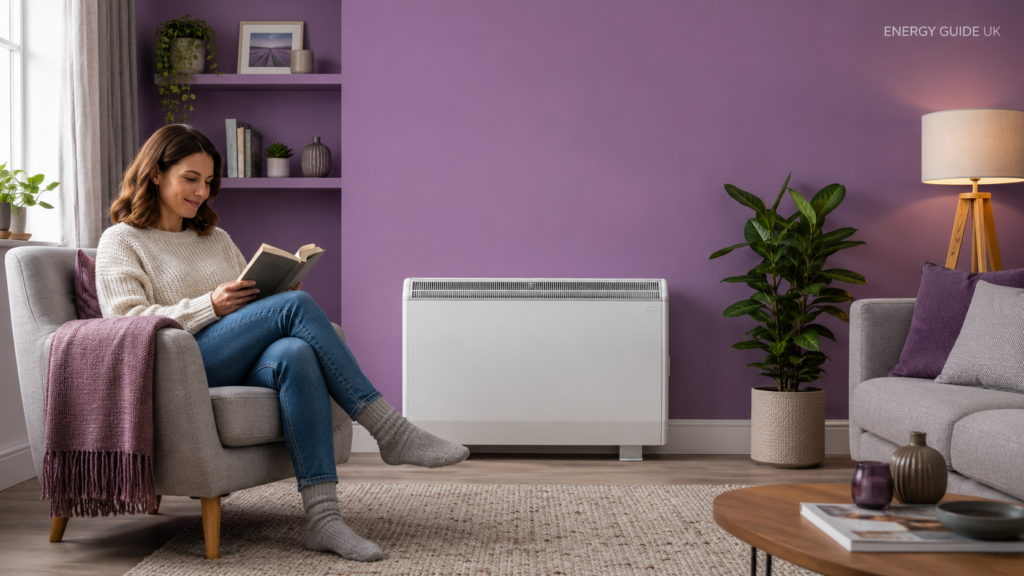
Key Takeaways on Storage Heater Replacement Grants 2026:
- ECO4 can fund a high-heat-retention storage-heater upgrade for eligible households to replace old, inefficient units.
- You’ll generally need an EPC rating of E, F, or G (sometimes D) and to receive a qualifying benefit. You may still qualify via one of four ECO4 Flex routes even without benefits.
- ECO4 is in its final phase and closes on 31 December 2026, with the Warm Homes Plan expected to take its place.
- Landlords can apply via tenant eligibility with tenant consent, and some tenancies may also require solar PV alongside the new heaters.
- If you don’t qualify for ECO4, check out heat pump grants through the Boiler Upgrade Scheme as a funded alternative.
- Installation typically takes 1 to 2 days, depending on the number of units and the size of your property.
What Is a Storage Heater and When Should You Replace It?
A storage heater works by heating ceramic bricks inside the unit overnight, usually on a cheap off-peak electricity tariff such as Economy 7, then releasing that stored heat gradually through the day. It’s one of the most common heating types in homes without a mains gas connection.
Most storage heaters last 10 to 15 years before they need replacing. How quickly yours wears out depends on how often it’s used and the size of the room it’s heating. UK Legislation requires that all new storage heaters must comply with the European Eco-design Directive and meet a minimum efficiency rating of 38.5% from January 2018, with built-in thermostats and fan-assisted output as standard.
If your electricity bills have been creeping up without any change in how you use your home, it’s often a sign your storage heater is working harder than it used to and getting less efficient as it ages.
What Are Storage Heater Replacement Grants, and Are They Still Available In 2026?
Storage heater replacement grants help eligible households upgrade old, broken or inefficient electric heating. The Energy Company Obligation, or ECO4, remains the main route for storage heater replacement grant searches in 2026. The scheme remains open until 31 December 2026, following the government’s extension of its original end date.
The grant doesn’t work like a simple voucher, and you usually won’t receive grant money directly. Instead, an approved installer carries out the agreed work via an energy supplier-funded route. A surveyor must inspect your home before approval and check your EPC rating, current heating, insulation, room layout and the best upgrade package for your property.
The ECO4 grant scheme can fund modern storage heaters if the property meets its eligibility criteria. New electric storage heaters fitted under ECO4 must reach a Standard Assessment Procedure (SAP) responsiveness rating of 0.8 or above. High-heat-retention storage heaters meet this standard.
Older storage heaters often store heat poorly and release it at the wrong times. A newer model can hold heat for longer, respond better to your routine and make off-peak electricity easier to use.
Who Qualifies for Storage Heater Replacement Grants?
You may qualify for a storage heater replacement grant if your home meets ECO4 rules. Eligibility depends on your property, EPC rating, household route and current heating setup. A home survey must also confirm which upgrades can actually improve your energy performance.
Private homeowners can qualify when their home has an EPC rating of D, E, F or G. Private tenants can qualify when their rented home has an EPC rating of E, F or G, but you need landlord permission before any work starts.
| Household Type | EPC Requirement | Main Route | Key Notes |
| Homeowner | D, E, F or G | Benefits, supplier route or ECO Flex | Your home and household must both meet scheme rules. |
| Private tenant | E, F or G | Tenant eligibility plus landlord permission | Your landlord must approve the work. |
| Social housing tenant | Usually E, F or G | Social landlord or ECO route | Rules depend on tenure, EPC rating and measure type. |
| No qualifying benefits | Depends on council rules | ECO Flex | Your council’s Flex statement controls this route. |
You can qualify through certain benefits, including Universal Credit, Pension Credit, Income Support, Housing Benefit and income-related ESA. Child Benefit can also count, but income thresholds apply.
You don’t always need benefits. ECO Flex can help households with low incomes, health needs or other vulnerabilities. Your local council sets the Flex rules for your area. Check your route through your local council, a participating energy supplier or a TrustMark-registered installer. A genuine offer should include a survey, written paperwork, clear installer details and confirmed costs before installation starts.
What Can Storage Heater Replacement Grants Cover?
Broken Storage Heaters
A broken storage heater may qualify when it can’t store heat or doesn’t deliver any heat when connected to an electricity supply. The installer must confirm the fault during the home survey and explain the checks used to reach their decision. A broken unit should only be replaced when it can’t be repaired at a reasonable cost.
If repair makes financial sense, ECO4 rules require repair instead. A storage heater may count as uneconomical to repair when parts aren’t available at a reasonable cost or within a reasonable time. It may also qualify when asbestos insulation blocks safe access to the broken part. Replacement can also apply when the repair costs more than a new storage heater.
Inefficient Storage Heaters
An inefficient storage heater is one with a responsiveness rating of 0.2 or less when assessed against the Standard Assessment Procedure. ECO4 uses SAP responsiveness ratings to assess how well electric heating responds to household demand. Older storage heaters, basic panel heaters and electric room heaters often perform poorly on this measure.
First-Time Central Heating
Some homes with storage heaters may qualify for first-time central heating (FTCH). According to Ofgem’s ECO4 delivery guidance, this route can apply when the home has never had a wet central heating system, or where the home hasn’t had a working or economically repairable efficient storage heater since 1 April 2022.
Broken but efficient storage heaters that can’t be economically repaired can also qualify for FTCH in some cases. FTCH can include options such as an air-source heat pump, ground-source heat pump, biomass boiler or another approved wet central heating system. The final option depends on the property’s suitability and the scheme’s rules.
District Heating or Renewable Heating
ECO4 can, in some cases, replace electric storage heaters with a district heating connection or a renewable heating system. This doesn’t mean every electric home will receive a full heating system change. The survey must demonstrate that the measure is appropriate for the property and complies with ECO4 rules.
A home with several old storage heaters may receive high-heat-retention storage heaters, while another may get a heat pump or other approved system if it suits the building better.
Insulation Plus Heating Work
ECO4 often treats heating upgrades as part of a wider home improvement plan. A survey may find that your home loses too much heat through the walls, roof or floor. In that case, insulation may need to come before or sit alongside storage heater replacement.
This can make the new heating system work better. It can also reduce wasted heat, improve comfort and lower running costs. Common linked measures can include loft insulation, cavity wall insulation, solid wall insulation or room-in-roof insulation. The final package depends on your property, EPC rating and ECO4 assessment.
Comparison of Measures under Storage Heater Replacement Grants:
| Grant-Funded Option | When It May Apply | Key Rule |
| Storage heater repair | The heater is broken, but the repair makes financial sense | ECO4 expects repair where practical. |
| High heat retention storage heater | The old heater is broken or inefficient | New units need SAP responsiveness of 0.8 or above. |
| First-time central heating | The home has never had wet central heating | Broken efficient heaters may qualify when repair isn’t economic. |
| District heating connection | A suitable network route exists | The property must meet scheme and network rules. |
| Renewable heating system | The home suits a wider heating change | Survey results decide suitability. |
| Insulation plus heating work | The home loses too much heat | ECO4 may package measures together. |
What Are High Heat-Retention Storage Heaters?
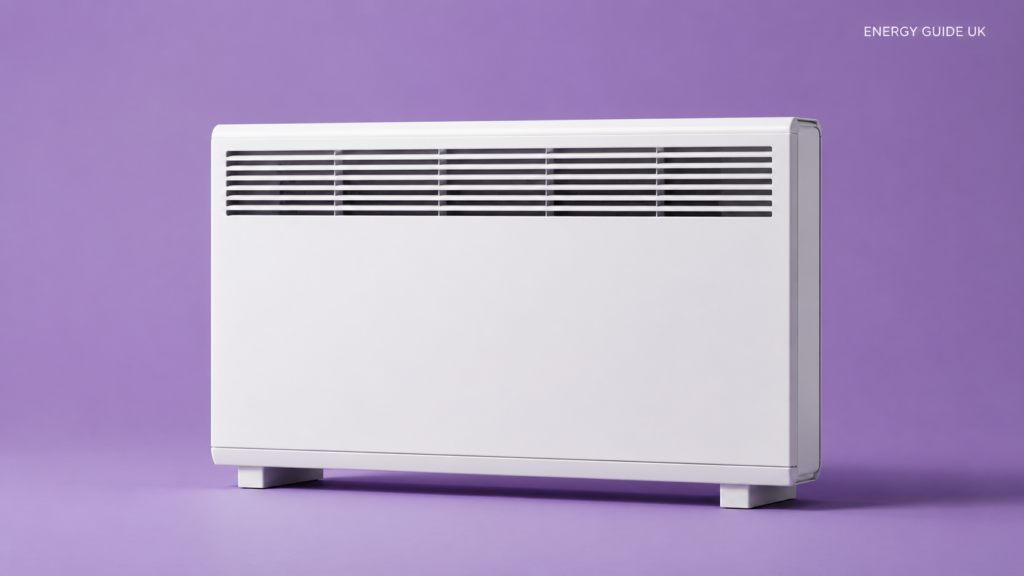
High-heat retention storage heaters are the modern replacement for many older electric storage heaters. They retain heat in better-insulated cores and release warmth more precisely. This makes them easier to manage than older units, which often release too much heat too early.
Approved installers typically fit high-heat-retention storage heaters or modern smart storage heaters with programmable thermostats, fan-assisted heat distribution, and intelligent controls. These are all qualifying heating control measures under ECO4.
Modern units go well beyond the minimum 38.5% efficiency standard required for electric storage local space heaters under the Eco-design Directive. Better heat retention means less energy wasted overnight and a more even temperature throughout the day. The intelligent controls can also help you meet your heating requirements through cheaper off-peak electricity, significantly outperforming older units that waste heat when not in use.
High-heat retention storage heaters are specifically designed to make the most of cheaper night-time electricity. If your home is on Economy 7 or a similar off-peak tariff, a high-heat-retention storage heater typically gets significantly more value from that cheaper overnight rate than an older, less efficient unit.
Check out our guides on the best heater for a conservatory and economical electric heaters.
How Much Can You Get with Storage Heater Replacement Grants?
Storage heater replacement grant funding varies by home, heating setup and survey result. Under ECO4, storage heater replacement grants aren’t a contribution toward the cost. They cover the full cost of the eligible upgrade at no charge to you. If your application is approved, the grant pays for:
- Removal and disposal of your existing inefficient storage heaters
- Supply of new high heat retention storage heaters or modern smart storage heaters
- Full installation by an approved, certified installer
- Any relevant heating controls, such as programmable thermostats, smart controls, and fan-assisted distribution systems
- Warranties on the new units
In some cases, solar panels are installed alongside the new storage heaters as part of the same funded package. Where this applies, the total grant value can be considerably higher than the cost of the heater installation alone. Not every application includes solar PV, and it depends on the property, the installer, and available funding. It’s worth asking about during your eligibility check.
You pay nothing up front and nothing on completion. The installer claims the grant on your behalf once they complete the work.
What Would It Cost Without a Grant?
Unlike private installations that can cost £700 to £1,500 per unit, ECO4 storage heater grants cover the upgrade costs, including removal, supply, installation, and warranties. For a home with three or four storage heaters, typical of a two- to three-bedroom property, that represents a privately funded cost of £2,100 to £6,000, fully installed. The grant eliminates that for eligible households.
How To Apply for A Storage Heater Replacement Grant
You can apply for a storage heater replacement grant through a council route, energy supplier or approved installer. The process can vary by area, but most applications follow the same basic steps.
1. Confirm your current heating type: Make a note of every storage heater, panel heater or room heater in your home. You can also record any broken units and take photos to help the installer assess your setup.
2. Check your EPC rating: Find your current Energy Performance Certificate before you apply. Homeowners usually need an EPC rating of D, E, F or G. Private tenants usually need an EPC rating of E, F or G.
3. Check benefits or ECO Flex eligibility: You may qualify through benefits, income, health needs or local council Flex rules. Your council can confirm its ECO Flex criteria.
4. Ask your council or energy supplier about participating routes: Not every installer or supplier offers the same measures. Ask which route covers storage heater replacement in your area.
5. Use a TrustMark-registered installer: Check the installer before booking a survey. ECO4 work must follow TrustMark and PAS standards, so don’t rely on verbal claims.
6. Complete a home survey: The surveyor will check your heating, insulation, room sizes, electrical supply and EPC details. They may also inspect broken storage heaters.
7. Review the quote and funded measures: Ask what the grant covers before any work starts. The quote should list the heater type, controls, insulation work and any electrical upgrades.
8. Keep paperwork after installation: Store your warranty, compliance certificate, installer details and funding paperwork safely. You may need them for repairs or future home sales.
What Documents Do You Need?
You’ll need evidence to support your storage heater replacement grant application. The exact documents can vary by council, supplier and installer route, so ask for the list before booking the survey.
You may need:
- Proof of address
- Current EPC rating
- Benefits evidence
- Income evidence for ECO Flex
- Health or vulnerability evidence for ECO Flex
- Tenancy agreement, if you rent
- Written landlord permission, if you’re a private tenant
- Recent energy bills
- Photos of your current storage heaters
- Evidence of broken or faulty heaters
- Details of your current electricity tariff
- Home survey paperwork
- Installer quote and measure list
Photos can help when a storage heater is broken, outdated or missing clear model details. Energy bills can also help confirm whether you already use an off-peak tariff. Keep copies in one folder before the survey. Missing evidence can slow approval or force the installer to revisit your application.
Do Tenants and Landlords Qualify?
Private tenants can qualify for storage heater replacement grants, but the process needs landlord permission.
What Tenants Need to Know
ECO4 checks both the tenant and the property. You may qualify through benefits, ECO Flex, income rules or health-related vulnerability.
Your rented home must also meet the correct EPC requirements. Private rented homes usually need an EPC rating of E, F or G for ECO4 support. Homeowners can qualify from D to G, so rented homes face stricter property rules.
Speak to your landlord before booking a survey. This avoids delays if the installer recommends new storage heaters, insulation or electrical changes.
What Landlords Need to Know
Landlords should confirm the installer’s TrustMark registration, funding route and warranty conditions before approving work.
They should also confirm who owns the new heaters, who maintains them, whether any customer contribution applies, and whether the work affects future maintenance responsibilities. New heaters, wiring changes or insulation can affect fixtures, room layouts and repair duties.
A landlord shouldn’t promise ECO4 work without the tenant’s consent. The tenant’s household route often supports the application, so both sides need to agree before installation.
What About Social Housing Tenants?
Social housing tenants may follow a different route. The landlord, council or housing association usually manages ECO4 work across eligible properties. Tenants should ask their housing provider whether storage heater replacement forms part of planned energy upgrades.
How To Avoid Scams in Storage Heater Replacement Grants
Storage heater replacement grants can attract genuine installers and misleading sales tactics. A real ECO4 offer should include checks, paperwork and a proper survey before approval.
Check The Installer First
Start by checking the installer’s TrustMark registration. Ofgem emphasises that all installers must be a TrustMark-registered business to be eligible to deliver measures under ECO4, with limited exceptions for certain district heating work.
You should also ask which energy supplier funds the work. ECO4 runs through supplier obligation routes, so the installer should clearly explain the funding path. Search for the installer yourself and check their registration details rather than relying on a logo in an advert or email.
Be Careful with “Guaranteed Free” Claims
Be cautious if someone promises free storage heaters before seeing your home. ECO4 approval needs eligibility checks, EPC details, heating evidence and a home survey. No installer should confirm funding from one phone call.
Some homes may receive fully funded work while others may need a contribution for wiring, controls, access work or linked insulation. Ask for the full cost position in writing before agreeing to anything.
Watch For Pressure Tactics
Avoid any company pushing you to sign on the same day. A reputable installer will give you time to read the documents and explain the proposed measures, warranty terms and any customer contribution. Don’t accept vague paperwork, missing company details or verbal promises. You should understand what will happen before anyone removes your old heaters.
Protect Your Personal Information
Only share benefit letters, tenancy documents or income evidence after checking the company. If an offer sounds suspicious, contact your council or energy supplier directly. A quick check can help you avoid hidden charges, poor installation or fake grant claims.
Storage Heater Replacement Grants vs Heat Pump Grants
Storage heater grants and heat pump grants support different homes. The right route depends on your current heating, insulation, budget and property layout.
Storage Heater Grants
A storage heater grant can suit homes that already use electric heating and need a simpler upgrade. ECO4 may fund high-heat retention storage heaters where the home qualifies. This route can work well for flats, smaller homes and properties without space for a wet heating system.
Storage heaters still use electricity, so tariffs matter. They usually work best with an off-peak electricity tariff, especially when the household can charge them overnight.
Heat Pump Grants
Heat pump grants can suit homes that are ready for a broader heating upgrade. The Boiler Upgrade Scheme offers grants for eligible heat pump installations in England and Wales. It can help homeowners replace fossil-fuel heating systems with low-carbon heating systems.
A heat pump may suit a well-insulated home with enough space for the outdoor unit. The property may also need radiator upgrades, pipework changes or hot water cylinder space. This route can cost more upfront than replacing storage heaters, but it can still make sense where the home is well-suited to low-temperature heating.
Which Route Should You Choose?
| Option | Best For | Scheme | Main Limitation |
| Storage heater replacement | Homes that use electrical heating and need a simpler upgrade | ECO4 | Running costs depend on electricity tariff |
| Heat pump | Homeowners replacing fossil fuel heating | BUS | May need design assessment and outdoor space and doesn’t usually cover simple storage heater swaps |
Choose a storage heater grant if you need a practical electric heating upgrade. Consider a heat pump grant if your home can support a full system change. A survey should confirm the best route before you commit.
Interested in other heating system grants? Check out our guides on boiler grants for pensioners, oil boiler grants and boiler grants for landlords. The video below also provides details on free boiler grants and funding:
What Happens After ECO4 Ends? The Warm Homes Plan
ECO4 closes on 31 December 2026. The government is expected to introduce new funding through the Warm Homes Plan, the successor framework for future home energy upgrades once ECO4 winds down.
The Warm Homes Plan was launched in January 2026, committing £15 billion to upgrade up to 5 million homes by 2030. Storage heaters are explicitly mentioned in the plan as technology that can help you make more of the energy you generate and use energy from the grid when it is cheapest.
If you think you might be eligible for a free storage heater replacement under ECO4, the sensible approach is to apply now. Funding is finite, and the scheme could close before its official end date if suppliers meet their targets early. If ECO4 has already closed by the time you’re reading this, the Warm Homes Plan is where to look for the current equivalent route.
Final Thoughts on Storage Heater Replacement Grants
If your storage heaters are old, costly to run, and dragging down your EPC rating, ECO4 remains the most direct route to a free replacement, but the window is closing. With the scheme set to end on 31 December 2026, checking your eligibility now rather than later could be the difference between a free upgrade and missing out altogether.
Start with the basics: check your EPC rating, confirm whether anyone in your household receives a qualifying benefit, and if not, ask your local council about ECO Flex before assuming you’re out of options. If your property doesn’t fit the standard storage-heater route, heat pump grants through the Boiler Upgrade Scheme are worth a look as an alternative, funded path.
Whatever happens after ECO4 closes, the underlying message doesn’t change: an old, inefficient storage heater costs you more every year it’s left in place. Whether that’s solved through ECO4, ECO Flex, the Warm Homes Plan, or a different grant entirely, getting it looked at now is worth the few minutes it takes.
FAQs About Storage Heater Replacement Grants
Can I Get Free Storage Heaters?
Yes, if you qualify under ECO4. The scheme funds eligible upgrade costs, such as the removal of your old units, the supply and installation of new high-heat-retention storage Heaters, and warranties. You generally need an EPC rating of E, F, or G and a qualifying benefit such as Universal Credit or Pension Credit. ECO4 closes 31 December 2026.
How Much Does It Cost to Replace Old Storage Heaters?
Without a grant, private storage heater installation typically costs £750 to £1,000 per room according to the Energy Saving Trust. For a home with three or four heaters, total private replacement costs typically run £2,100 to £6,000 fully installed.
How to Replace Old Storage Heaters?
Under ECO4, complete a short eligibility check online. If you’re eligible, a local approved installer will contact you to arrange a free home survey. Once approved, the installer removes your old units and installs new high-heat-retention storage heaters, typically within 1 to 2 days. If you don’t qualify for ECO4, contact an MCS-certified installer for a private quote and consider heat pump grants as an alternative.
What Can I Replace a Storage Heater With?
The most common funded replacement is a high-heat-retention storage heater. It’s a modern smart unit with programmable thermostats and fan-assisted distribution, funded under ECO4 for eligible households. Other options include heat pumps, wet heating systems, electric panel heaters, and infrared heating. The right choice depends on your property type, budget, and eligibility.
How Much Is a Small Storage Heater?
A small domestic storage heater typically costs £200 to £500 as a standalone unit, with installation adding £150 to £300. Economy 7-compatible models with basic controls sit at the lower end of that range. Modern units with smart controls cost more, typically £400-£800 per unit before installation.
What Is the Lifespan of a Storage Heater?
A well-maintained storage heater typically lasts 10 to 15 years. Lifespan depends on usage frequency, room size, and whether the unit is regularly serviced. Older units more than 15 years old often show rising electricity bills, a sign of declining efficiency as the heating elements and insulation degrade over time. If your heater is approaching or past this threshold, it’s worth checking your ECO4 eligibility for a funded replacement.
Sources and References
- UK Parliament – Written evidence submitted by Dimplex (RFH0034)
- Energy Saving Trust – Electric heating
- GOV.UK – Commission Regulation (EU) 2015/1188
- Ofgem – Energy Company Obligation (ECO)
- Ofgem – ECO4 Guidance: Delivery
- Department for Energy Security & Net Zero – Warm Homes Plan