
Appliance energy ratings help you understand the energy efficiency, running costs, and carbon emissions of products, allowing you to choose those that use less energy and are more cost-effective.
Using an appliance that isn’t running as efficiently as it could be can easily drive up your energy bills and carbon footprint. The first step to lowering your energy bill is to stop using energy unnecessarily, and that starts with choosing the most energy-efficient models when shopping for household appliances.
For example, the Energy Saving Trust notes that choosing an A-rated over a B-rated tumble dryer can save around £750 in Great Britain and £850 in Northern Ireland over its 13-year lifetime. Appliance energy ratings provide a straightforward way to compare models and identify the option that consumes the least energy for the task.
Many people still overlook these differences when two appliances appear similar on the shelf. Over time, this can result in years of wasted electricity when washing, cooling, heating, and drying. A clear understanding of appliance energy ratings makes it far easier to select efficient models that offer long-term savings, steady performance, and a lower environmental impact without changing your daily routine.
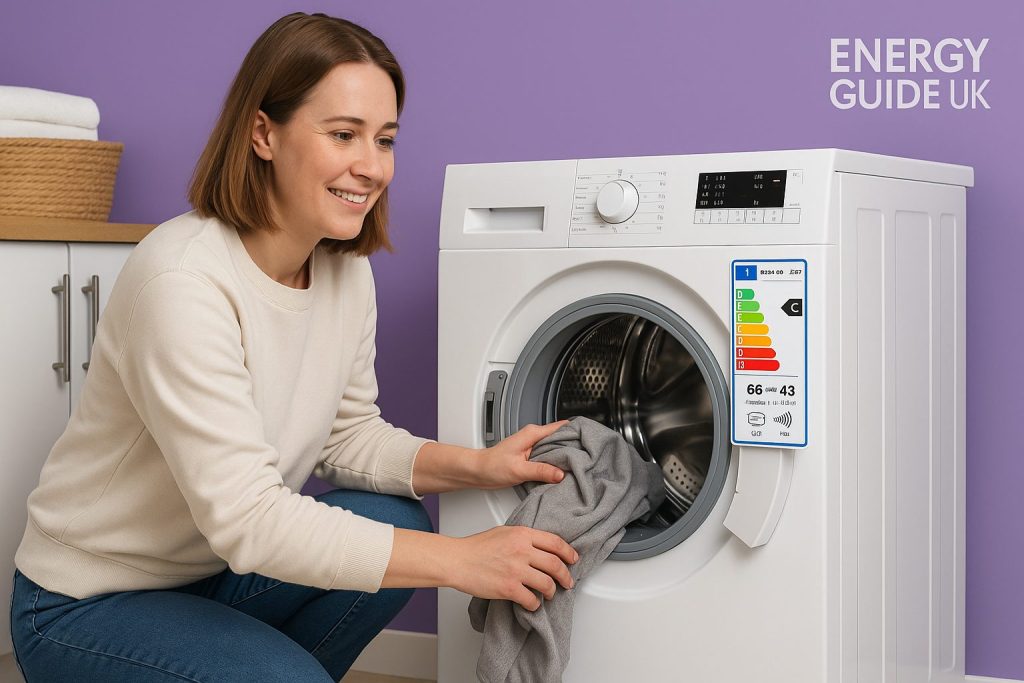
Key Takeaways on Appliance Energy Ratings:
- Appliance energy ratings indicate the amount of electricity and water a model consumes during everyday tasks, enabling you to compare long-term running costs.
- The modern A to G scale is stricter than the old A+, A++ and A+++ system, so most new appliances fall between C and F even when they are efficient.
- Labels include detailed figures such as kilowatt-hours, water consumption, noise level, capacity, and programme duration, depending on the appliance type.
- Choosing the correct size is just as important as the rating itself, since oversized appliances can waste energy, even if they are efficient.
- Real savings emerge over years of use, with efficient washing machines, fridge-freezers, and tumble dryers offering the greatest long-term benefits.
- Daily habits, such as using eco settings, loading the dishwasher correctly, and maintaining appliances, can help reduce energy consumption.
- Checking the kilowatt-hour figures on the label and multiplying them by your electricity rate gives a clear estimate of expected costs.
What Appliance Energy Ratings Measure
Appliance energy ratings provide a straightforward way to understand the electricity usage of an appliance during typical household activities. Each rating reflects how efficiently an appliance performs its essential tasks, such as cooling food, washing clothes, or heating water, while using the least amount of energy possible.
The rating also accounts for real-world factors that influence consumption, such as capacity, temperature settings, programme length, and how often the appliance is typically used. These ratings are designed to help you make fair comparisons between models that may look similar but behave very differently once installed in your home.
A higher-rated fridge uses less electricity to keep food cold throughout the year. A higher-rated washing machine can clean the same load using fewer kilowatt hours. Even a television with a better rating will draw less power during evening viewing.
Although ratings don’t reflect every aspect of performance, they offer a reliable benchmark for long-term running costs. When you know what the letters mean, it becomes much easier to choose appliances that will manage your household tasks while keeping energy usage under control.
This understanding is especially valuable for appliances that operate for extended periods each day, where even minor efficiency improvements translate into significant financial savings over time.
New UK Energy Labels Explained
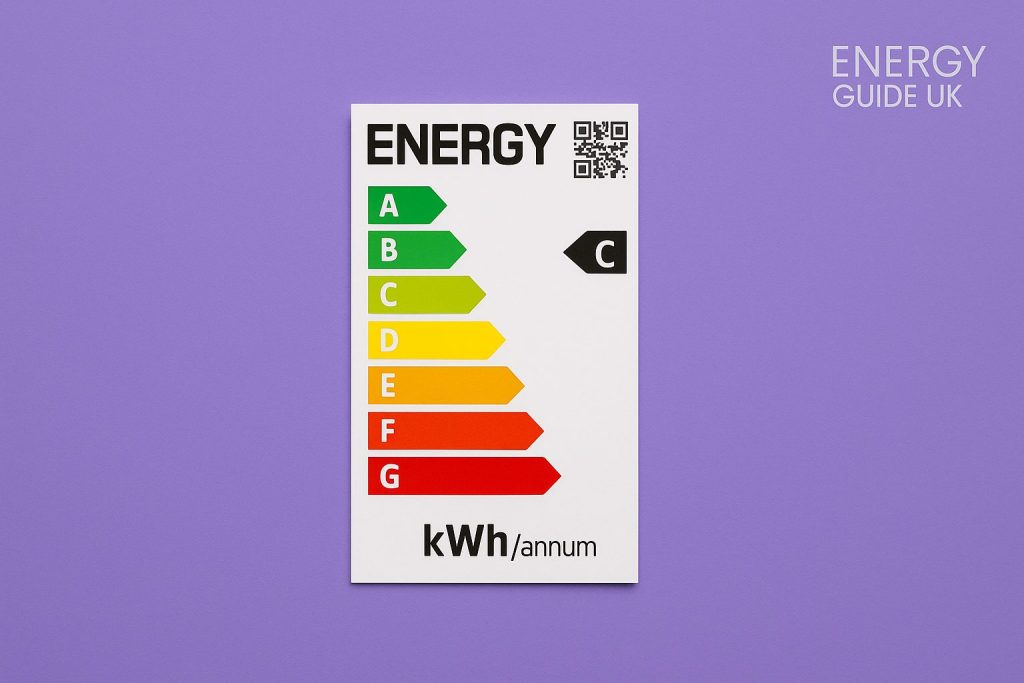
The current A to G energy label was introduced to make efficiency ratings clearer and easier to compare. The modern scale replaced the older A+, A++, and A+++ system, which had become confusing as more appliances clustered near the top of the scale.
The updated scale creates a wider spread across the seven letters, with A reserved for the most efficient models available today and lower bands used for appliances that consume more energy during everyday use.
The new label includes several pieces of information that help you understand how an appliance performs in real conditions. The large coloured bar shows the overall efficiency rating, with A at the top in dark green and G at the bottom in red. Below this, you’ll find detailed measurements, such as kilowatt-hours per year or kilowatt-hours per cycle, water usage, capacity, and noise level, depending on the type of appliance.
These figures are based on standardised test programmes, allowing you to compare models from different brands on equal terms. A small QR code now appears in the top corner of every label. Scanning it takes you to the manufacturer’s official product factsheet, where you can view verified performance data.
This provides shoppers with a straightforward way to verify the accuracy of the rating and understand how the appliance uses energy, allowing them to make an informed purchase decision.
Why the Old A+++ to G Ratings Changed
The previous A+++ to G system was created to help shoppers understand which appliances used the least energy, but over time, it became difficult to interpret.
Many manufacturers improved efficiency to the point where most new models fell somewhere between A+ and A+++, making it difficult for shoppers to discern meaningful differences between products. A fridge with an A+ label and another with an A++ label often looked similar on the shelf, even though their real energy use varied much more than the lettering suggested.
The updated A to G scale solves this problem by resetting the entire system. Instead of adding more plus signs at the top, the scale now spreads products across seven simple letter grades. A is kept for exceptional efficiency, which is why it’s rare on the modern market.
Most new appliances now fall into the C to F range, even when they are more efficient than older models that once carried A+ or A++ labels. This doesn’t mean today’s appliances have become less efficient. It simply reflects the tougher testing requirements and the need for a scale that can accommodate future improvements.
The new scale also helps you see where genuine progress is being made. As technology advances, space remains at the top of the scale for the next generation of highly efficient models.
Old A+++ to G Ratings Compared to the New A to G Ratings
The shift from the old A+++ to G scale to the new A to G system can feel confusing at first, especially when older appliances in your home still display the previous labels. The two systems measure efficiency in different ways, and the modern tests are considerably stricter. This means that an appliance once carrying an A+ or A++ label would often be reassigned to a much lower band if assessed under the new rules.
Some product groups still use the older scale because the revised tests have not yet been introduced for every category. Ovens and cooker hoods continue to display A+++ to D labels until the newer requirements are fully rolled out.
For household tumble dryers, new EU energy labelling and ecodesign regulations require retailers to replace the old labels with the new A to G labels at every point of sale, whether in-store or online, from 1 July 2025. When buying a tumble dryer, look for models that meet the new A or B standard, as these will deliver the lowest running costs over the appliance’s lifetime.
How to Read an Energy Label
The Main Efficiency Rating
The large coloured scale on the left side of the label shows the overall rating, with A in dark green at the top and G in red at the bottom. This rating tells you how efficiently the appliance performs under standard test conditions. It provides a straightforward method for comparing the typical energy consumption of various models.
Key Performance Icons and Figures
Beneath the main rating, you will find icons and numbers that describe how the appliance behaves in everyday use. The information displayed depends on the type of product.
Washing machines and dishwashers include kilowatt hours per one hundred cycles, water usage, programme length, and noise. Fridges and freezers list annual energy consumption, total storage volume, and noise emissions. Televisions and monitors show screen size, resolution, and estimated yearly electricity consumption.
These figures help you compare models that may look similar but differ significantly in running costs.
Using the QR Code for Verified Data
UK Regulations require products placed in the Great Britain market to include a QR code that links to the required model information.
You can find a small QR code in the top right corner of the label. Scanning it takes you directly to the official product database, where you can view confirmed technical details and performance metrics. This provides a reliable way to assess how the appliance uses energy, allowing you to make an informed purchase decision.
Appliance Energy Ratings by Category
Different appliances are tested in different ways. Each label reflects how the product uses energy during typical household activities, and the figures displayed give you a fair way to compare models.
Below is a clearer, more visual breakdown for every major appliance type.
Washing Machines
What the label shows
| Information on Label | What It Means |
| kWh per 100 cycles | Electricity used during the Eco 40 to 60 wash |
| Water per cycle | Litres used for the eco wash |
| Programme duration | Time required for the eco wash |
| Load capacity | Maximum kilograms per wash |
| Noise level | Sound output during the spin cycle |
What to look for
- A washing machine with a higher rating uses fewer kilowatt hours and less water per load.
- If you wash frequently, the difference in consumption becomes more noticeable over time.
- Larger loads can save energy if you avoid half loads.
Washer Dryers
What the label shows
| Information | Meaning |
| kWh per 100 wash cycles | Energy used for the wash-only mode |
| kWh per 100 wash and dry cycles | Combined consumption for a complete cycle |
| Water use | Water required for each mode |
| Programme length | Total time for wash-only and wash-dry cycles |
| Noise level | Sound output during operation |
What to look for
- Drying adds significant energy use, which is why washer-dryers often fall into lower rating bands.
- Comparing the two sets of figures provides a clearer view of long-term running costs.
- Moisture-sensing models reduce wasted energy by automatically ending the cycle.
Dishwashers
What the label shows
| Information | Meaning |
| kWh per 100 eco cycles | Standard energy use for the “eco” programme |
| Water per cycle | Litres used per wash |
| Programme duration | Time needed for the eco wash |
| Place settings | The capacity of the appliance |
| Noise emissions | Sound level during operation |
What to look for
- Daily users benefit most from a dishwasher with a higher rating.
- A model with a shorter eco cycle can help reduce peak-time energy use.
- Place setting capacity matters for larger households.
Fridges, Freezers and Fridge-Freezers
What the label shows
| Information | Meaning |
| Annual kWh use | Expected electricity use for a full year |
| Chilled volume | Litres of fridge space |
| Frozen volume | Litres of freezer space |
| Noise level | Sound output in decibels |
What to look for
- These appliances run continuously, so small rating improvements have a big financial impact.
- Larger American-style units often fall into lower rating bands due to their greater storage volume.
- Choosing the right size can reduce wasted space and electricity.
Tumble Dryers
What the label shows
| Information | Meaning |
| Annual energy use | Electricity required for standard drying cycles |
| Drying capacity | Maximum load in kilograms |
| Programme duration | Time required for the standard cycle |
| Noise level | Sound output during drying |
What to look for
- Energy-efficient tumble dryers reuse warm air and usually achieve the best ratings.
- Moisture sensors stop the cycle when clothes are dry, preventing wasted electricity.
Ovens
What the label shows
| Information | Meaning |
| Energy use (conventional) | Electricity consumed during standard tests |
| Energy use (fan mode) | Electricity consumed during fan-assisted tests |
| Cavity size | Internal cooking volume |
What to look for
- Ovens still use the older A+++ to D scale.
- Good insulation and the right size often matter more than small differences in rating.
- A full oven is more efficient than heating a large space for a single item.
Televisions and Displays
What the label shows
| Information | Meaning |
| Energy use per 1,000 hours (SDR) | Electricity used in standard mode |
| Energy use per 1,000 hours (HDR) | Electricity is used in high brightness mode |
| Screen size | Measured diagonally in inches |
| Resolution | Picture detail in pixels |
What to look for
- HDR can significantly increase electricity use.
- Larger screens may use more energy, even with a good rating.
- Lower brightness settings reduce consumption during everyday viewing.
Appliances Without Energy Labels
Some products, such as kettles, microwaves, dehumidifiers, and portable electric heaters, don’t display energy labels. For these items:
- Check the wattage.
- Estimate how long the appliance will run each day.
- Multiply the kilowatt hours by your electricity unit rate to estimate the running cost.
- Use the item only when needed to avoid unnecessary consumption.
How to Choose an Energy-Efficient Appliance
Selecting an efficient appliance becomes much easier once you understand what the energy ratings represent and how they relate to real household use. The key is to match the right model to your lifestyle, rather than focusing solely on the label.
Look for the Best Rating Within Your Budget
Higher-rated appliances typically use fewer kilowatt hours over their lifetime. When comparing two similar models, selecting the one with the stronger rating often results in lower long-term costs. This is especially important for refrigerators, freezers, washing machines, and tumble dryers, as these are used frequently or run continuously. A slightly higher upfront cost can translate into much larger savings over the product’s lifespan.
Match the Size to Your Household
Choosing the correct size is one of the most effective ways to reduce energy use. A fridge that is too large for your household wastes energy cooling empty space. A washing machine that is too small may require extra loads each week. Size and rating work together, so selecting the right capacity is as important as choosing the most efficient model.
Consider How Often You Will Use the Appliance
Appliances with higher daily usage, such as refrigerators, washing machines, and televisions, offer the greatest return when you choose an efficient model. A rarely used guest room television or a small secondary freezer may not justify the highest rating. Consider your routine and select models that strike a balance between performance and efficiency, based on your actual usage.
Compare Features That Improve Efficiency
Modern appliances often include features that support lower energy use, such as moisture sensors in dryers, eco programmes in dishwashers, inverter motors in washing machines, and adjustable brightness in televisions. These features work in conjunction with the energy rating to reduce ongoing energy consumption.
Check Running Costs, Not Just the Rating
The energy label provides consumption figures, allowing you to estimate the annual cost before making a purchase. Multiply the listed kilowatt-hours by your electricity rate per unit to determine the cost of running the appliance. This approach helps you compare models fairly, even when they fall within the same rating band.
Choosing with these factors in mind ensures that your appliance delivers both strong performance and long-term savings without requiring any change to your day-to-day habits.
Tips to Reduce Appliance Energy Consumption
Buying an efficient appliance is an important first step, but how you use it each day also affects long-term energy use. Good habits can make a noticeable difference to your electricity bill without impacting comfort or convenience.
Use Eco Settings Whenever Possible
Eco programmes on washing machines and dishwashers use lower temperatures and longer cycles to reduce electricity and water use. These settings are designed to align with the figures shown on energy labels, giving you the most efficient performance the appliance can offer.
Run Appliances With Full Loads
Washing machines, dishwashers, and tumble dryers work best when filled to their recommended capacity. Running half loads increases the total number of cycles required each week, which in turn raises overall energy consumption. Filling each load properly delivers the same level of cleaning or drying for less energy.
Set Fridges and Freezers to the Right Temperature
Keeping a fridge colder than necessary increases consumption throughout the day. A setting of five degrees for fridges and minus eighteen degrees for freezers maintains safe food storage while keeping electricity use under control. Regularly defrosting older freezers also prevents ice build-up that forces the appliance to work harder.
Avoid Standby Where Practical
Televisions, microwaves, and gaming consoles are some of the worst appliances to leave on standby. Turning them off at the plug when not in use can reduce wasted electricity over the course of the year, especially in homes with multiple devices.
Make Use of Natural Drying
Air drying clothing whenever possible reduces reliance on tumble dryers, which are among the most energy-intensive appliances in the home. Even partial air drying before finishing items in a dryer can lower electricity use across the year.
Keep Appliances Clean and Well-Maintained
Clogged filters in dishwashers or dryers, dusty coils behind fridge-freezers, and worn door seals all cause appliances to use more energy than necessary. A few minutes of routine maintenance can improve efficiency and extend the appliance’s lifespan.
These simple habits complement the energy rating system, helping you keep day-to-day consumption as low as possible while still using your appliances comfortably and effectively.
Final Thoughts on Appliance Energy Ratings
Energy ratings make choosing household appliances far easier by showing how much electricity and water each model uses during everyday tasks. The modern A to G scale gives you a clearer picture of real-world performance than the older A+, A++, and A+++ labels, and the information on each label helps you compare models fairly.
Once you understand how the figures relate to your own household routines, it becomes simple to recognise which appliances will keep long-term running costs under control. Efficient models provide steady savings over the years, resulting in lower costs for washing, cooling, heating, and drying. When you match the right size and features to your home, you gain the full benefit of those savings without adjusting your daily habits.
Using appliances thoughtfully strengthens those gains even further. Whether you’re replacing a single appliance or planning a full home update, paying attention to appliance energy ratings ensures that each purchase supports lower bills, reliable performance, and a smaller environmental impact.
FAQs on Appliance Energy Ratings
What Is The Best Energy Rating, A or G?
A is the best rating on the modern A to G scale. It represents the lowest energy consumption under standard testing conditions. G is the least efficient rating.
Is An Energy Rating of D Good for a Washing Machine?
Yes. Under the new scale, a D-rated washing machine is considered efficient. The updated tests are stricter, so many modern machines fall between C and F even when they perform well.
Is an F-Rated Fridge Good?
An F-rated fridge is less efficient than models in the C to E range. It may still run reliably, but it will use more electricity throughout the year. Upgrading to a higher-rated fridge can cut long-term running costs.
Which Is Better, a 3-Star or 5-Star Fridge?
A five-star fridge is more efficient because it uses less electricity for the same cooling performance. The star system is separate from the A to G scale, but higher stars indicate stronger efficiency.
Is There Much Difference Between an A-rated and a B-rated Washing Machine?
Yes. Even a slight difference between these ratings can significantly impact long-term electricity use, particularly in households that operate multiple loads each week. An A-rated model will generally use fewer kilowatt-hours per 100 cycles.
Are New Ovens More Energy Efficient?
Many new ovens are designed with improved insulation, enhanced heating elements, and more efficient fan systems. Although ovens still use the older A+++ to D scale, modern models often provide lower running costs than older units due to these design improvements.
Sources and References
Energy Saving Trust – Home appliances and energy efficiency ratings
European Commission – Tumble Dryers
GOV.UK – Regulations: energy information