

If one radiator isn’t heating up but the others work normally, the problem is usually limited to that radiator or the pipes supplying it. Common causes include a closed or stuck valve, trapped air, sludge or restricted water flow.
The good news is that you may be able to fix the problem without calling a heating engineer. Start by checking the radiator’s controls and identifying where it feels cold. These simple observations can help you work out what to try next.
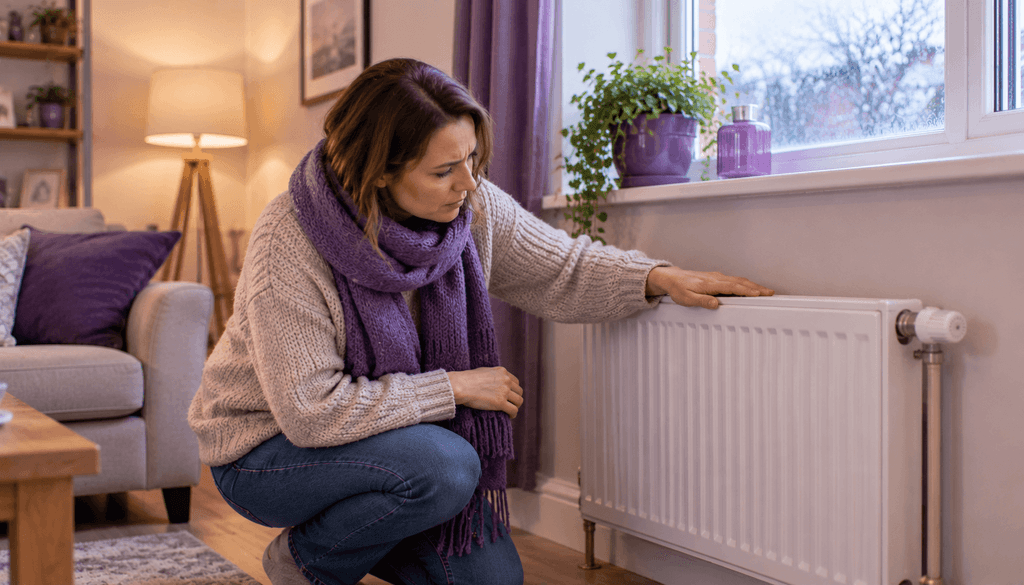
Why is only one radiator not heating up?
When the other radiators work normally, it suggests that the boiler is producing heat and water is circulating through at least part of the heating system.
That makes a problem affecting the individual radiator more likely than a complete boiler failure.
The following table can help you narrow down the cause.
| What you notice | Possible cause | What to check |
| Radiator completely cold | Closed or stuck valve | Radiator temperature control |
| Cold at the top, warm at the bottom | Trapped air | Bleed the radiator |
| Warm at the top, cold at the bottom | Sludge or restricted circulation | Internal deposits |
| Warm at one end only | Restricted water flow | Valves and pipework |
| Heats slowly while other radiators get hot | Heating system imbalance | Radiator balancing |
| Cold after recent plumbing work | Closed valve or trapped air | Recent changes to the system |
These temperature patterns are useful clues rather than definite diagnoses. Several problems can sometimes produce similar symptoms. Below, you’ll find seven ways to find the exact problem.
1. Check the radiator’s temperature control
The easiest place to start is the valve that controls how much heated water can enter the radiator.
Many modern radiators have a thermostatic radiator valve (TRV). This is usually the numbered control fitted at one end of the radiator.
A TRV automatically adjusts water flow according to the room temperature. As the room reaches the selected temperature, the valve reduces the flow of heated water.
If the TRV is set too low, the radiator may remain cold even when the central heating is operating normally.
Turn the control to a higher setting and allow time for the radiator to respond.
Remember that a TRV responds to the temperature around the valve. A radiator may stay cool if the surrounding air is already warm enough, even when other rooms still need heating.
2. Could the thermostatic radiator valve be stuck?
Sometimes the problem isn’t the temperature setting but the valve mechanism itself.
Inside a typical thermostatic radiator valve is a small pin that moves as the valve opens and closes. Over time, this mechanism can become stuck, preventing water from flowing properly through the radiator.
This is particularly worth considering if the radiator hasn’t been used for several months.
A possible sign is a radiator that remains completely cold even when its temperature control is turned up and the other radiators are heating normally.
However, this doesn’t confirm that the valve is stuck. Trapped air, closed valves and blocked pipework can produce similar symptoms.
Don’t force the control or attempt to pull out the internal pin. If the valve appears stuck and ordinary adjustment doesn’t help, a plumber or heating engineer can inspect and free or replace the mechanism as appropriate.
3. Check whether the lockshield valve is closed
Most radiators have another valve at the opposite end from the main temperature control.
This is called the lockshield valve. It usually has a plain plastic cap rather than a numbered temperature dial.
The lockshield controls how much water flows through the radiator and is commonly adjusted when balancing the heating system.
If it has been closed completely, water may be unable to circulate through the radiator.
This can happen after plumbing work, radiator removal or previous maintenance.
You can visually check whether the valve or surrounding pipework shows signs of damage or leaking. However, the position of the cap alone doesn’t reliably tell you how far open the valve is.
Avoid making large, arbitrary adjustments. Changing the lockshield setting can affect how heat is distributed across the rest of the system.
If you suspect the valve was closed during recent work, ask the installer or a heating engineer to confirm its correct setting.
4. Bleed the radiator if air is trapped
Trapped air is another common reason for a radiator not heating properly.
Because air rises, it often collects near the top of the radiator and prevents hot water from filling that section.
A typical symptom is a radiator that’s cold at the top but warm towards the bottom.
If this matches your radiator, bleeding it may restore normal heating.
How to bleed a radiator safely
- Turn off the central heating and allow the radiator to cool.
- Locate the bleed valve, usually near the top of the radiator.
- Hold a cloth or small container beneath the valve.
- Carefully open it slightly using a radiator key or suitable screwdriver.
- Allow the trapped air to escape.
- Close the valve when water begins to emerge steadily.
Don’t remove the bleed screw completely or overtighten it afterwards.
If you have a sealed heating system, check the boiler pressure once the radiator has been bled and the system is cool. Follow the manufacturer’s instructions if repressurising is necessary.
If no air escapes, or bleeding doesn’t improve the radiator’s performance, another fault may be responsible.
5. Could sludge be blocking the radiator?
Over time, corrosion inside a central-heating system can create deposits commonly known as sludge.
These deposits can collect inside radiators and restrict the movement of heated water.
A radiator that’s warm at the top but noticeably cold at the bottom may contain sludge, particularly if the cold area persists after the system has been running for some time.
However, a cold section doesn’t automatically mean the radiator requires flushing. Restricted flow or other faults may produce similar symptoms.
If only one radiator is affected, a heating engineer may recommend removing and cleaning that radiator or investigating its valves and connecting pipework.
A full-system powerflush is not automatically necessary just because one radiator has a cold patch.
The appropriate treatment depends on how much contamination is present and whether other parts of the system are affected.
6. Does the heating system need balancing?
If the radiator eventually gets warm but takes much longer than the others, the heating system may be poorly balanced.
Balancing involves adjusting the flow through individual radiators so that heated water is distributed more evenly.
Without proper balancing, radiators closer to the boiler or pump may receive more water than those farther away.
However, balancing is less likely to solve the problem if a radiator is completely cold because its valve is stuck or its pipework is blocked.
Before balancing your radiators, check that the affected radiator’s valves work and that trapped air isn’t preventing circulation.
Balancing should correct uneven heat distribution, not compensate for a mechanical fault.
7. Why isn’t a newly installed radiator heating up?
If the problem appeared immediately after a radiator was installed, replaced or moved, it’s worth considering whether the work is connected.
Possible explanations include valves that haven’t been reopened, trapped air or an issue with the new pipework.
The radiator may also need to be incorporated into the system’s existing balance.
If the radiator has never heated correctly since installation, contact the installer before making significant adjustments yourself.
They can check the connections, water flow and valve settings.
What if the radiator still isn’t heating up?
If you’ve checked the temperature control, bled the radiator where appropriate and ruled out obvious setting problems, the next step is to investigate restricted circulation.
A heating engineer can check whether the valves are functioning correctly, water is reaching the radiator and the connecting pipework is clear.
They can also determine whether sludge removal or system balancing is necessary.
If several radiators aren’t heating up, the problem may be more widespread, potentially involving system pressure, controls or the circulation pump.
Avoid repeatedly bleeding a radiator that doesn’t contain trapped air, as this won’t resolve a stuck valve or blocked pipe.
When should you call a heating engineer?
Arrange professional help if the radiator remains completely cold after basic checks, its valves appear stuck, or there’s evidence of a leak.
You should also seek assistance if the problem began after installation work or if the radiator repeatedly needs bleeding.
Most faults affecting a single radiator can be investigated by a competent plumber or heating engineer. Problems involving the boiler’s internal components should be handled by someone appropriately qualified for that appliance.
Frequently asked questions
Why is one radiator cold while all the others are hot?
The most likely causes are a closed or stuck radiator valve, trapped air, sludge or restricted water flow. Because the other radiators work, a fault local to the cold radiator is often more likely than a complete boiler failure.
Can a stuck radiator valve stop it heating completely?
Yes. If a valve remains closed, heated water may be unable to circulate through the radiator. A plumber or heating engineer can check whether the mechanism is stuck or damaged.
Should I bleed a radiator that’s completely cold?
Bleeding is most useful when trapped air is suspected, especially if the top is cold while the bottom is warm. If the radiator is completely cold and no air is trapped, check the valves and consider other circulation problems.
Why is my radiator hot at the top but cold at the bottom?
This can indicate sludge or restricted circulation inside the radiator. However, some temperature variation is normal, particularly when the heating system is operating at lower water temperatures.
Do I need a powerflush if one radiator isn’t heating?
Not necessarily. If only one radiator is affected, targeted cleaning or valve repairs may be more appropriate. A full-system powerflush should be recommended only when there’s evidence that wider contamination needs addressing.
Sources
DCI Boilers, One Radiator Not Heating Up (https://dciboilers.co.uk/one-radiator-not-heating-up/)
Accurate as of: 10 October 2026