

A faulty boiler pump can prevent heated water from circulating properly, leaving radiators cold, causing unusual noises or making the boiler overheat and shut down. However, these symptoms can also have other causes, so a pump replacement isn’t always necessary.
Replacing a central-heating pump typically costs around £200–£350 in the UK, including parts and labour. Replacing a pump built into the boiler can be more expensive, particularly if access is difficult or the boiler requires a specific replacement component.
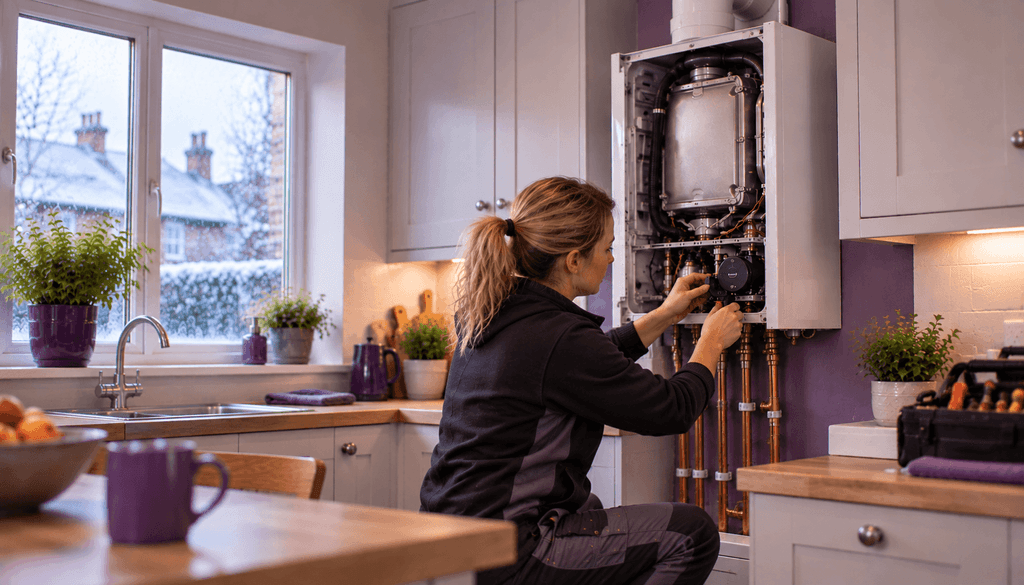
What does a boiler pump do?
A boiler pump, also called a circulation pump, moves heated water around your central-heating system.
When your boiler heats water, the pump helps move it through the pipes and radiators before returning it to the boiler to be heated again. Without adequate circulation, heat cannot be distributed properly around your home.
There are two common arrangements:
- Internal boiler pumps: Built into the boiler casing, commonly found in modern combi and system boilers.
- External central-heating pumps: Installed separately in the pipework, often found in older or conventional heating systems.
Both perform a similar job, but their location and design can affect how easily they’re repaired or replaced.
What are the signs of a faulty boiler pump?
A failing pump can cause several heating problems, although none of these symptoms proves that the pump itself has failed.
| Symptom | Could the pump be responsible? | Other possible causes |
| All radiators remain cold | Yes | Controls, valves or another boiler fault |
| Some radiators remain cold | Possible | Trapped air, sludge or poor balancing |
| Boiler overheats or shuts down | Yes | Restricted circulation or sensor problems |
| Humming, grinding or rattling | Yes | Air, vibration or other boiler components |
| Water leaking near the pump | Yes | Damaged seals, joints or pipework |
| Heating takes unusually long | Possible | Poor circulation or incorrect controls |
Radiators aren’t heating properly
If the boiler appears to be running but the radiators remain cold, insufficient circulation is one possible explanation.
A pump that has stopped working may be unable to move heated water around the system. However, if only one or two radiators are affected, the problem is more likely to be localised.
For example, trapped air, sludge or a closed radiator valve can cause radiators not to heat up properly, even when the pump is functioning normally.
Boiler overheating or shutting down
A boiler needs sufficient water circulation to carry heat away from its heat exchanger.
If circulation becomes restricted, the boiler may reach its temperature limit and shut down to protect itself. Depending on the appliance, it may display a fault code or require attention before restarting.
A faulty pump is one possible cause, but blocked pipework, airlocks and other circulation problems can produce similar behaviour.
Repeated overheating can also contribute to a boiler turning on and off unexpectedly.
Unusual humming or grinding noises
Circulation pumps normally produce some operating noise, but new or noticeably louder sounds can indicate a problem.
A humming sound may occur when a pump motor is energised but the mechanism isn’t turning correctly. Grinding or rattling can sometimes indicate worn components, trapped air or vibration.
Noise alone isn’t enough to diagnose pump failure. Other components within the boiler can produce similar sounds.
Water leaking around the pump
Water around a circulation pump may indicate a problem with a seal, connection or the pump housing.
Leaks should be investigated promptly, particularly when water could reach electrical components.
Avoid removing covers or attempting to tighten internal boiler connections yourself.
What causes boiler pump problems?
Circulation pumps contain moving and electrical components that can deteriorate over time.
Common causes include:
- Wear and tear. Bearings, motors and other components can eventually wear out through regular use.
- Sludge and debris. Corrosion products circulating through the heating system can interfere with pump operation or restrict water movement.
- Trapped air. Air within the heating system can interfere with circulation and contribute to unusual noises.
- Electrical or control faults. A pump may fail to operate because of a motor, wiring or control problem rather than a mechanical blockage.
- Long periods without operation. Some pumps can become stuck after extended periods of inactivity, particularly when deposits have accumulated.
The underlying cause matters because installing a new pump won’t necessarily solve the problem if the system still contains significant sludge or other restrictions.
How much does boiler pump replacement cost?
The average cost of supplying and fitting a central-heating circulation pump in the UK is approximately £275, with most standard replacements costing between £200 and £350.
| Cost element | Indicative price |
| Replacement circulation pump | £100–£200 |
| Installation labour | £100–£150 |
| Total supply and installation | £200–£350 |
| Average replacement cost | £275 |
These are typical prices for a straightforward installation, rather than guaranteed quotes for every boiler. A more complicated internal pump replacement may cost considerably more.
The component and labour figures are already included in the total. They shouldn’t be added to the replacement price again.
What affects the replacement cost?
Pump type and model. Different heating systems require different pumps. Some replacement components are more expensive than standard standalone circulation pumps.
Accessibility. An external pump installed in accessible pipework may be easier to replace than a pump located inside a tightly packed boiler casing.
Labour. A straightforward replacement generally takes around one to two hours, but draining, accessing components and resolving additional faults can extend the job.
Location and call-out charges. Labour costs vary across the UK, while emergency or out-of-hours work can be more expensive.
Additional system problems. If sludge, leaks or damaged electrical components contributed to the failure, further work may be needed.
Ask for an itemised quote showing the replacement part, labour, VAT and any additional work.
Can a faulty boiler pump be repaired?
Sometimes a pump that appears to have failed doesn’t need replacing.
For example, an engineer may discover that circulation is being restricted by trapped air or debris, or that the pump isn’t receiving the correct electrical signal.
Depending on the design and condition of the pump, resolving the underlying problem may restore normal operation.
However, a pump with a failed motor, worn internal components or significant physical damage will often need replacing.
Modern circulation pumps are commonly replaced as complete units rather than having individual internal components repaired.
Before approving a replacement, ask the engineer whether the pump itself has failed or whether another problem is preventing it from operating correctly.
Internal boiler pumps vs external central-heating pumps
Although both circulate heated water, their replacement procedures can differ.
An external circulation pump is generally installed in the heating pipework and may be relatively accessible. The engineer can often isolate the relevant section of the system before removing it.
An internal pump forms part of the boiler assembly. Replacement may require removing the appliance casing, draining part of the boiler and working around other internal components.
Some boilers also use model-specific pumps or integrated assemblies rather than standard standalone units.
This is why the typical £200–£350 replacement range shouldn’t automatically be applied to every internal boiler pump.
How long does it take to replace a boiler pump?
A straightforward circulation-pump replacement commonly takes one to two hours, provided the component is accessible and no additional faults are discovered.
More complicated installations can take longer, particularly when the engineer needs to access an internal boiler component or carry out additional work on the heating system.
After fitting the pump, the engineer should restore the system, check for leaks, remove trapped air where necessary and confirm that water is circulating correctly.
Can you check a boiler pump yourself?
You can carry out some basic checks without opening the boiler or handling the pump.
Start by checking that the heating is switched on, the thermostat is requesting heat and the programmer is set correctly.
Next, check the boiler’s pressure reading against the manufacturer’s recommended range. Low pressure can interfere with normal heating operation on some systems.
Also look for fault codes on the boiler display and check whether the problem affects every radiator or only certain rooms.
These observations can help an engineer narrow down the cause.
Don’t remove the boiler casing, open pump connections, loosen electrical components or attempt to free a stuck pump yourself. Internal boiler repairs and electrical work require appropriate competence, and gas-appliance work must comply with Gas Safe requirements.
If the boiler repeatedly overheats, shuts down or shows signs of leaking, stop using it and arrange professional inspection.
Should you replace the pump or the whole boiler?
A failed circulation pump doesn’t automatically mean the entire boiler needs replacing.
If the boiler is otherwise reliable, replacing a pump for a few hundred pounds may be considerably more economical than installing a new appliance.
However, the decision becomes less straightforward when the boiler is older, replacement components are expensive or several other faults have developed.
Consider the boiler’s overall condition, recent repair history, warranty status and the availability of replacement parts.
An older boiler that has operated reliably may still be worth repairing. Conversely, a relatively expensive pump replacement combined with other significant problems may make a new boiler more attractive.
The repair quote should be assessed alongside the boiler’s condition rather than its age alone.
How can you prevent boiler pump problems?
Not every pump failure can be prevented, but keeping the heating system in good condition may reduce avoidable circulation problems.
Regular boiler servicing provides an opportunity for an engineer to identify unusual noises, leaks or other developing faults.
Maintaining appropriate system water quality is also important. Sludge and corrosion debris can restrict circulation and interfere with components.
Where suitable, a magnetic boiler filter can help capture circulating magnetic debris, although it won’t remove every type of contamination or correct an existing blockage.
If radiators heat unevenly, the system may also benefit from checking for trapped air or balancing the radiators. These measures address different problems and shouldn’t be treated as automatic solutions to pump failure.
Avoid arranging a powerflush simply because a pump has failed. Cleaning should be based on evidence that contamination is contributing to the problem.
Frequently asked questions
How do I know if my boiler pump is faulty?
Possible signs include cold radiators, unusual pump noises, poor circulation, leaks and repeated boiler overheating. However, these symptoms can also result from other heating-system faults, so an engineer should confirm the cause.
How much does a new boiler pump cost?
A replacement circulation pump typically costs around £100–£200 for the component alone. Including installation, a standard replacement generally costs £200–£350, with an average of approximately £275.
Can a boiler work with a broken pump?
A boiler may still switch on or attempt to heat water, but inadequate circulation can prevent it from distributing heat properly. Some boilers will shut down when they detect overheating or insufficient circulation.
How long does a boiler pump last?
A circulation pump can operate for many years, but its lifespan depends on the model, operating conditions, system water quality and maintenance. There isn’t one reliable replacement age that applies to every pump.
Is a noisy boiler pump dangerous?
Not every pump noise indicates an immediate safety problem. However, grinding, rattling or unusually loud humming can indicate a fault. If the noise is accompanied by overheating, leaking or repeated shutdowns, stop using the boiler and arrange an inspection.
Sources
HSE, Gas Safety – Home Owners (https://www.hse.gov.uk/gas/domestic/faqownerocc.htm)
HSE, Gas Safety Check – Who Can Do It? (https://www.hse.gov.uk/gas/landlords/safetycheckswhocan.htm)
Accurate as of: 8 October 2026