

The number of radiators in your home can help you estimate what size boiler you need. As a general guide, homes with up to 10 radiators are often matched with a 24–27kW combi boiler, while properties with 12–15 radiators may be suited to a 28–34kW model. Larger homes with 20 radiators may need a higher-capacity boiler or a different heating arrangement.
However, radiator count alone doesn’t determine the correct boiler size. The size and insulation of your home, the amount of heat it loses and your household’s hot-water requirements are equally important.
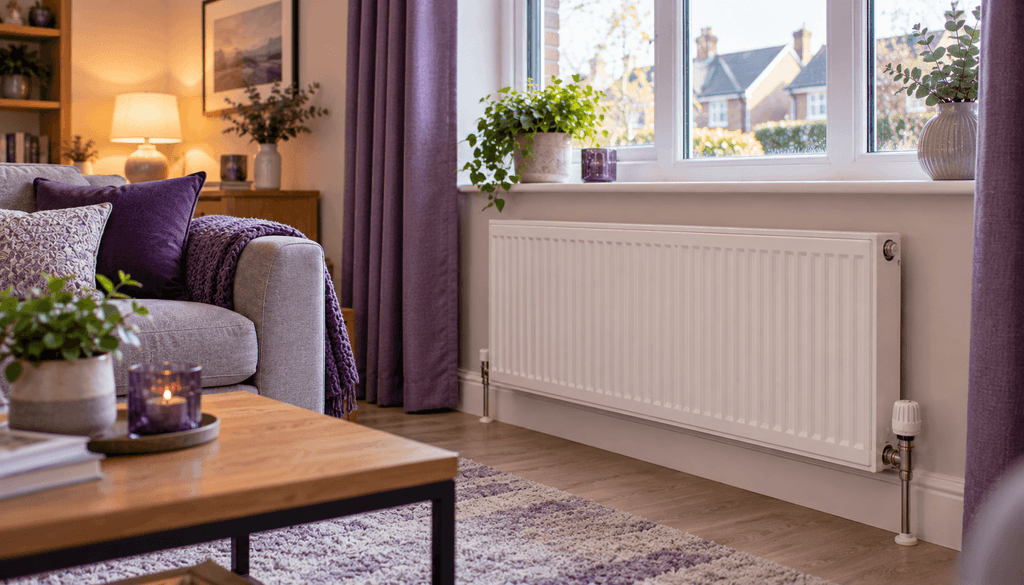
Boiler size by number of radiators
The table below provides typical boiler sizes for homes with different numbers of radiators.
| Number of radiators | Typical combi boiler size | Typical system or regular boiler size |
| 6 radiators | 24–27kW | 9–18kW |
| 8 radiators | 24–27kW | 9–18kW |
| 10 radiators | 24–27kW | 9–18kW |
| 12 radiators | 28–34kW | 18–26kW |
| 15 radiators | 28–34kW | 18–26kW |
| 20 radiators | Approximately 35–42kW | 27–40kW |
These are broad consumer-guide recommendations. They assume typical property characteristics and hot-water requirements, not a calculated heating load. A property with the same number of radiators may need a smaller or larger boiler.
The combi boiler figures are generally higher because combis must produce hot water immediately when someone opens a tap.
System and regular boilers usually heat water stored in a separate cylinder, allowing them to operate with a lower maximum output.
Why do combi boilers have higher kW ratings?
Boiler output is measured in kilowatts (kW), but the figure advertised for a combi boiler doesn’t always represent how much heat it can send to your radiators.
A combi boiler has two jobs:
- Central heating: Heating the water circulating through your radiators.
- Hot water: Heating incoming mains water quickly enough for taps, showers and baths.
Producing hot water instantly can require considerably more power than heating a well-insulated home.
For example, the Worcester Bosch Greenstar 1000 30kW combi boiler provides a maximum central-heating output of 24kW. Its higher 30kW rating relates to its hot-water performance.
This means a 30kW combi doesn’t necessarily provide more central-heating power than a smaller model.
A larger combi may offer a higher hot-water flow rate, but that doesn’t mean your radiators need a higher heating output.
When comparing models, check their separate central-heating and hot-water specifications.
What size boiler do I need for 6 radiators?
For a home with six radiators, a 24–27kW combi boiler is a common recommendation when there’s one bathroom and relatively modest hot-water demand.
However, the building may require considerably less than 24kW of heat for its radiators.
A smaller system or regular boiler may therefore be sufficient if the property has a separate hot-water cylinder.
A well-insulated flat with six small radiators will generally have a different heating requirement from an older property with six large radiators and limited insulation.
The actual heat loss should determine the central-heating capacity.
What size boiler do I need for 8 radiators?
Homes with eight radiators often fall into the same broad sizing category as those with six radiators.
A 24–27kW combi boiler may suit a typical property with one bathroom, provided the model can meet its hot-water and heating requirements.
For a system or regular boiler, a lower output may be adequate.
There’s no automatic need to increase the boiler rating simply because the home has two additional radiators.
Their physical sizes, the rooms they heat and the property’s insulation are more important than the difference between six and eight radiators.
What size boiler do I need for 10 radiators?
A 24–27kW combi remains a common starting point for homes with around ten radiators and one bathroom.
However, some households may prefer a model with higher hot-water output, particularly where a powerful shower or greater water demand is involved.
A system or regular boiler in the 9–18kW range may suit some smaller or moderately insulated properties, depending on their calculated heating requirements.
The main question isn’t whether the boiler can physically connect to ten radiators. It’s whether it can provide enough heat to maintain comfortable room temperatures during cold weather.
What size boiler do I need for 12 radiators?
Consumer sizing guides often suggest a 28–34kW combi boiler for homes with more than ten radiators, particularly properties with several bedrooms and bathrooms.
However, this doesn’t mean a home with twelve radiators necessarily needs 28kW of central-heating output.
The higher combi rating may be recommended primarily because the household has greater hot-water requirements.
For a system or regular boiler, broad guidance commonly suggests around 18–26kW for this category.
A properly calculated heat loss may show that considerably less output is required.
What size boiler do I need for 15 radiators?
A home with fifteen radiators is often a larger property, so sizing becomes more dependent on building characteristics.
A 28–34kW combi may be suitable in some cases, although a system boiler with a hot-water cylinder can be a better option where multiple bathrooms are regularly used.
The cylinder allows stored hot water to supply several outlets without relying entirely on the boiler’s instantaneous hot-water performance.
For central heating, the installer should consider the total heat required by the building rather than assuming fifteen radiators need a particular output.
A well-insulated property with fifteen radiators could have a lower heating demand than an older, poorly insulated house with fewer radiators.
What size boiler do I need for 20 radiators?
Homes with twenty radiators are often placed in the highest categories of consumer boiler-sizing tables.
Broad recommendations may suggest combi boilers around 35–42kW or system and regular boilers around 27–40kW, depending on the property and household.
However, twenty radiators don’t automatically require a 40kW boiler.
Radiators vary considerably in size and output. The central-heating requirement could be much lower if the building is well insulated.
For a large home with multiple bathrooms, a system boiler and appropriately sized hot-water cylinder may offer a more practical solution than a very powerful combi.
Professional heat-loss calculations are particularly important for larger properties because oversizing can increase costs without improving comfort.
Why isn’t radiator count enough to calculate boiler size?
The number of radiators provides a rough indication of property size, but doesn’t reveal how much heat the building actually needs.
Several factors affect the calculation.
Property size and insulation
A larger home generally requires more heat, but insulation makes a significant difference.
Heat escapes through walls, roofs, floors, windows and ventilation. A well-insulated home can retain warmth for longer and may need less heating output.
An older property with poorly insulated walls and substantial draughts may need considerably more heat than a modern home of similar size.
Radiator size and output
Two radiators can have very different heating capacities.
A large double-panel radiator can release much more heat than a small single-panel radiator, even though both count as one radiator.
The temperatures at which the heating system operates also affect how much heat each radiator can deliver.
Hot-water demand
For combi boilers, the number of bathrooms and the amount of hot water used are major considerations.
A household with one shower may have different requirements from a family regularly using several bathrooms.
Increasing the combi’s hot-water output doesn’t necessarily mean increasing its central-heating output.
Local climate and desired temperatures
A home in a colder location may need more heating during winter.
The indoor temperatures you want to maintain also influence the heat-loss calculation.
These factors explain why two houses with identical radiator counts can require different boilers.
How do you calculate the correct boiler size?
The most reliable approach is a heat-loss calculation.
A heating engineer estimates how much heat escapes from the property during cold weather and determines the output required to replace it.
This involves assessing individual rooms, including their dimensions, insulation, windows, ventilation and desired indoor temperatures.
The room-by-room results are then used to establish the building’s overall heating requirement.
For example, if the calculated design heat loss is 9kW, the central-heating system must be capable of delivering approximately that amount under the relevant design conditions.
That doesn’t mean the boiler must have a 24kW heating output simply because it serves ten radiators.
For a combi boiler, hot-water requirements must also be considered separately.
Can a boiler be too big for the number of radiators?
Yes. A boiler with substantially more heating capacity than the property needs can operate less efficiently under some conditions.
Modern boilers can reduce their output when less heat is required. This is known as modulation.
However, every boiler has a minimum output below which it cannot reduce its heating power.
If the home’s heat demand regularly falls below that minimum, the boiler may switch on and off frequently instead of running steadily.
When comparing boilers, the minimum heating output can therefore be just as important as the maximum rating.
Choosing a significantly oversized boiler doesn’t guarantee warmer radiators, faster heating or lower bills.
The ideal approach is to select a boiler that meets the home’s maximum heating demand while also operating effectively when much less heat is needed.
Can a 24kW boiler run 15 radiators?
Yes, potentially.
A 24kW boiler can supply fifteen radiators if its central-heating output is sufficient for the property’s calculated heat loss and the heating system is appropriately designed.
The total number of radiators doesn’t determine how much heat they need at any one time.
For example, a home with fifteen radiators and a calculated heat loss of 12kW doesn’t automatically require a boiler capable of producing 30kW for central heating.
However, if it’s a combi boiler, its hot-water performance must also satisfy the household’s requirements.
A 24kW boiler should never be assumed suitable without checking the actual specifications and building heat demand.
Frequently asked questions
How many radiators can a 30kW boiler run?
There’s no fixed number. A 30kW boiler may comfortably serve many radiators if its central-heating output meets the building’s heat demand. Remember that a 30kW combi may have a lower maximum output for central heating than for hot water.
Is a 24kW boiler enough for 10 radiators?
Often, yes. Many UK sizing guides suggest 24–27kW combis for homes with up to ten radiators and one bathroom. However, heating demand and hot-water requirements should be checked before selecting a model.
Do bigger radiators need a bigger boiler?
Not necessarily. Larger radiators can deliver more heat, but the boiler needs to be sized according to how much heat the building loses, not simply the total rated capacity of its radiators.
Should I replace my boiler with the same kW size?
Not automatically. Insulation improvements, extensions, changes to hot-water use and differences between boiler models can all affect the appropriate size. A new heat-loss calculation is preferable to copying the existing boiler’s rating.
Does radiator balancing affect boiler size?
No. Balancing helps distribute heated water around the radiators, but doesn’t change the building’s underlying heat loss. An incorrectly balanced system may perform poorly even when the boiler is appropriately sized.
Accurate as of: 17 October 2026