

Most boilers last around 10 to 15 years, although a well-maintained boiler can continue working beyond this. Vaillant says boilers can last up to 15 years or more with appropriate maintenance, while Baxi gives a typical lifespan of 10–15 years for a boiler that is serviced annually and properly maintained.
Reaching 15 years doesn’t automatically mean your boiler needs replacing. Its reliability, repair costs, efficiency and parts availability can be more important than its age alone.
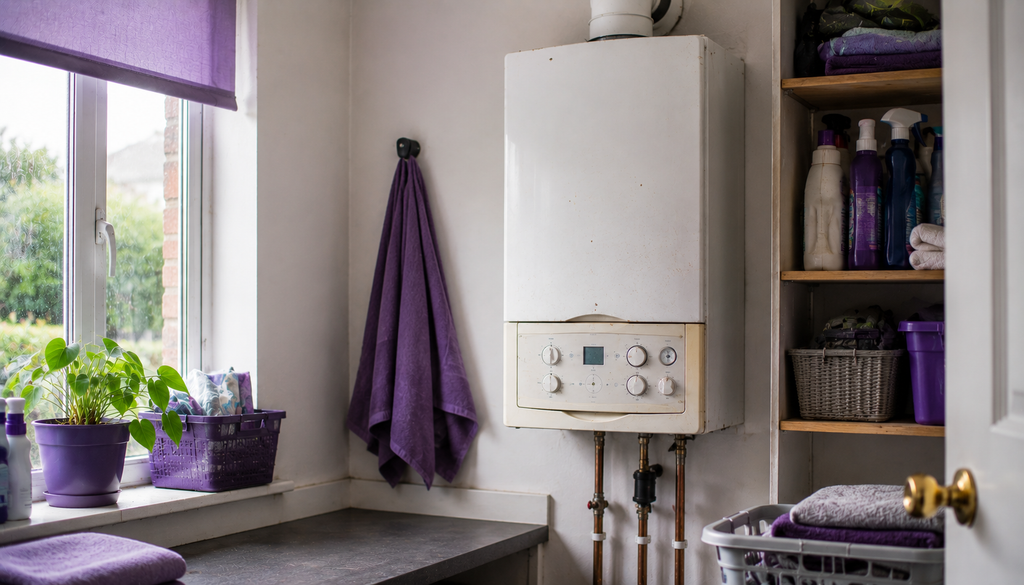
There is also evidence that boilers can remain viable for longer. Evidence submitted to Parliament argued that UK households may replace boilers prematurely and cited a potential technical lifespan of around 22 years, compared with the 10–15 years commonly quoted by UK manufacturers.
The practical takeaway is that 15 years should be treated as a point at which replacement becomes more likely, not an automatic replacement date.
Dover District Council, for example, uses an industry-standard lifespan of 15 years as a guide for its boiler replacement programme because repairs can become more expensive beyond this point.
How long do different types of boiler last?
Boiler type can affect longevity, but maintenance, installation quality and system condition can matter just as much.
| Boiler type | Typical lifespan |
| Gas combi boiler | Around 10–15 years |
| Gas system boiler | Around 10–15 years |
| Regular/heat-only boiler | Around 10–15+ years |
| Oil boiler | Around 10–15 years |
According to manufacturers, oil boilers have roughly the same 10–15-year lifespan as an average gas boiler when appropriately maintained.
You may see much more precise lifespan estimates online for individual boiler types and brands. These should be treated cautiously. How a particular boiler has been installed, operated and maintained can make it difficult to predict its lifespan simply from the name on the casing.
What affects how long a boiler lasts?
Two identical boilers installed on the same day won’t necessarily fail at the same age.
Several factors can affect longevity.
Servicing and maintenance
Regular servicing gives an engineer an opportunity to check how the boiler is operating and identify developing problems.
Manufacturers often recommend an annual service by a Gas Safe registered engineer and claim that regular maintenance can help extend boiler life.
Annual servicing may also be required under the terms of a manufacturer’s guarantee.
Servicing won’t guarantee that a boiler reaches a particular age, but ignoring developing faults can allow relatively minor problems to become more expensive ones.
Sludge and corrosion
The boiler is only one part of a wet central-heating system.
Corrosion within radiators and pipework can create magnetite and sludge. If contamination circulates through the heating system, it can affect components within the boiler.
One manufacturer recommends measures such as corrosion inhibitor and magnetic filtration to help protect heating systems and identifies sludge build-up as something that can reduce boiler lifespan.
If a system is already badly contaminated, however, simply fitting a filter won’t remove all existing sludge. The appropriate cleaning method depends on the condition of the system.
Installation quality
Even a good boiler can perform poorly if the wider heating system isn’t properly designed or prepared.
Correct boiler sizing, system cleaning, controls and commissioning all matter. A boiler that frequently short cycles or operates under unsuitable system conditions can experience unnecessary wear.
This is one reason lifespan comparisons based purely on brand can be misleading.
How heavily the boiler is used
A boiler serving a large household with substantial heating and hot-water demand may operate considerably more than the same model installed in a smaller property.
Usage alone doesn’t determine lifespan, but the amount and nature of work the boiler performs contribute to wear over time.
Water and system condition
Limescale and poor system-water quality can also affect heating components.
Keeping the heating circuit appropriately treated and addressing contamination can therefore help protect the boiler rather than viewing it as an appliance isolated from the rest of the central-heating system.
How do you know when a boiler is nearing the end of its life?
Age is a useful context, but condition is more important.
An older boiler may be worth considering for replacement if several of these problems occur together:
- Breakdowns are becoming more frequent
- Repairs are becoming increasingly expensive
- Replacement parts are difficult or costly to obtain
- The boiler repeatedly loses pressure
- Heating or hot-water performance has deteriorated
- The boiler makes new or unusual noises
- Your heating needs have changed
- An engineer identifies significant deterioration
Frequent breakdowns, slow-heating radiators, poor hot-water performance, unusual noises and recurring pressure loss are among signs that replacement may be worth considering.
None of these symptoms automatically means the boiler is beyond repair. Many can also be caused by individual faults that an engineer can correct.
Should you replace a boiler after 10 years?
Not automatically.
A 10-year-old boiler that remains reliable, has readily available replacement parts and can be economically repaired may have useful life left.
This is an important distinction because the commonly quoted 10–15-year lifespan can easily be mistaken for a recommended replacement schedule.
Functioning boilers can sometimes be replaced before the end of their useful life, including boilers that are only 7–12 years old. Replacement parts may also remain available for many gas boilers for up to 20 years, so age alone does not necessarily determine when replacement is needed.
That doesn’t mean keeping every old boiler is financially sensible. Instead, the decision should be based on its actual condition.
Should you replace a boiler after 15 years?
At around 15 years, it becomes more sensible to start planning for replacement, particularly if repair costs are increasing.
But the same principle applies: the boiler’s birthday isn’t sufficient reason on its own.
Consider:
Reliability: Is it still working consistently, or have breakdowns become frequent?
Repair cost: Is the current fault relatively inexpensive, or does the boiler need a costly major component?
Parts availability: Can the engineer still obtain the parts needed to maintain it?
Performance: Does it reliably provide the heating and hot water your household requires?
Efficiency: Is it an older, inefficient boiler whose replacement could reduce fuel use?
Future repairs: Are you paying to repair one fault on an otherwise sound appliance, or putting money into a boiler with several deteriorating components?
The combination of these factors gives a much better answer than age alone.
Repair or replace an old boiler?
A useful way to approach the decision is to consider both the cost of today’s repair and the likely condition of the boiler afterwards.
| Situation | Repair may make more sense | Replacement may make more sense |
| Boiler is relatively young | ✓ | |
| Minor, inexpensive fault | ✓ | |
| Boiler otherwise reliable | ✓ | |
| Parts readily available | ✓ | |
| Frequent recent breakdowns | ✓ | |
| Major expensive repair | ✓ | |
| Parts becoming difficult to obtain | ✓ | |
| Boiler no longer meets household needs | ✓ | |
| Several components deteriorating | ✓ |
An engineer can identify the fault and give you a repair price. You can then compare the cost with replacement rather than making the decision solely from the boiler’s age.
Does an old boiler become less efficient?
Age alone doesn’t tell you exactly how efficiently a boiler is operating.
However, an older boiler may have been designed to a lower efficiency standard than a modern condensing model. Its condition, controls and the temperatures at which the heating system operates also influence real-world efficiency.
The UK Government notes that condensing boilers achieve greater efficiency when operating with sufficiently low return-water temperatures, allowing them to recover more heat from their flue gases.
This means replacing an old non-condensing boiler with a modern condensing boiler can improve efficiency, but you shouldn’t assume that replacing any functioning 10-year-old condensing boiler will automatically produce a large saving.
The difference depends on what you are replacing and how both systems operate.
How can you make your boiler last longer?
You can’t prevent normal wear indefinitely, but good maintenance can improve the chances of a boiler reaching the upper end of its useful lifespan.
Have it serviced annually
Arrange an annual boiler service with an appropriately qualified engineer.
Deal with faults rather than ignoring them
Recurring pressure loss, unusual noises, fault codes and unreliable heating are worth investigating.
A small repair can become more disruptive or expensive if an underlying problem is allowed to continue.
Look after the wider heating system
The condition of your radiators and pipework affects the boiler too.
Appropriate corrosion inhibitor, system cleaning and magnetic filtration can help control contamination.
Use the boiler and controls appropriately
Correctly configured heating controls and suitable flow temperatures can help a modern condensing boiler operate efficiently.
Avoid changing installer-level settings yourself. If you suspect the boiler is poorly configured or repeatedly short cycling, ask an engineer to assess the system.
When should you start budgeting for a replacement?
If your boiler is approaching 10–15 years old, it makes sense to know roughly what replacement would involve even if it is still working.
That doesn’t mean replacing it immediately.
Planning ahead simply gives you more choice. You can compare options and obtain quotes rather than making a rushed decision after a winter breakdown.
Once an older boiler begins needing frequent or expensive repairs, you can then compare those costs with the replacement option you’ve already researched.
Frequently asked questions
Can a boiler last 20 years?
Yes. A boiler can remain operational for 20 years or more, although UK manufacturers commonly quote around 10–15 years as a typical lifespan. Evidence submitted to Parliament has also challenged the assumption that boilers necessarily need replacing after 10–15 years.
How long does a combi boiler last?
Manufacturers say that a modern combi boiler can typically last around 10–15 years, depending on the model and how regularly it is serviced.
How long does an oil boiler last?
Oil boilers have a typical lifespan of around 10–15 years, broadly similar to gas boilers, with regular servicing and checks helping them reach their expected lifespan.
Is a 10-year-old boiler old?
A 10-year-old boiler is entering the age range in which replacement becomes more common, but it isn’t automatically at the end of its useful life. Reliability, condition, repair costs and parts availability matter more than age alone.
Is a 15-year-old boiler worth repairing?
It can be. A relatively inexpensive repair to an otherwise reliable boiler may still make financial sense. An expensive repair becomes harder to justify if the boiler has already suffered repeated faults or other major components are deteriorating.
Sources
Vaillant, How long do boilers last? (https://www.vaillant.co.uk/advice/understanding-heating-technology/boilers/how-long-do-boilers-last/)
Baxi, How long does a boiler last? (https://www.baxi.co.uk/help-and-advice/faqs/how-long-does-a-boiler-last)
Worcester Bosch, Oil boiler replacement (https://www.worcester-bosch.co.uk/oil-boiler-replacement)
UK Parliament, Supplementary written evidence submitted by The Heating Hub — Boiler lifespan (https://committees.parliament.uk/writtenevidence/125976/pdf/)
Dover District Council, Planned works to your home — Boiler replacements (https://www.dover.gov.uk/housing/council-tenants/planned-works)
UK Government, Heat and Buildings Strategy (https://www.gov.uk/government/publications/heat-and-buildings-strategy/heat-and-building-strategy-accessible-webpage)
Accurate as of: 22 August 2026