

A smart meter measures how much gas or electricity your home uses and automatically sends readings to your energy supplier.
An energy monitor helps you track electricity consumption, often showing how much individual appliances use. Unlike smart meters, standalone energy monitors don’t replace your existing meter or send readings to your supplier.
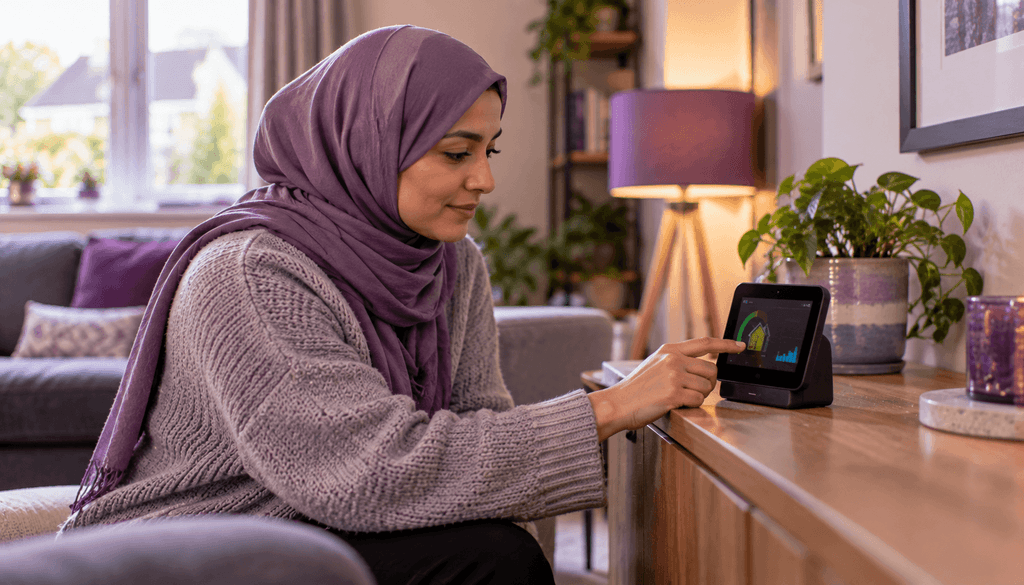
However, there’s a third device worth understanding: the in-home display supplied with a smart meter. This shows your household’s energy consumption and estimated costs. It’s sometimes called a smart energy monitor, which can make the terminology confusing.
Energy monitor vs smart meter: comparison
| Feature | Smart meter | Standalone energy monitor |
| Main purpose | Measure energy for billing | Track and investigate energy use |
| Measures electricity | Yes | Yes |
| Measures gas | Yes, with a smart gas meter | Generally no |
| Sends readings to supplier | Yes | No |
| Measures individual appliances | Not directly | Yes, with plug-in models |
| Replaces existing meter | Yes | No |
| Installation | Energy supplier | Depends on monitor type |
| Typical cost | No upfront installation charge in Great Britain | Usually purchased separately |
| Helps identify energy waste | Yes | Yes |
Both devices provide information about energy consumption, but they serve different purposes.
A smart meter is primarily a measuring and billing device, while a standalone energy monitor is designed to help you understand where electricity is being used.
What does a smart meter do?
A smart meter replaces a traditional gas or electricity meter.
It measures your home’s energy consumption and sends readings automatically to your supplier through a secure communications network.
This means you normally don’t need to submit manual meter readings, and your bills can be based on actual consumption rather than estimates.
In Great Britain, smart meters are available for both gas and electricity. If your home uses both fuels, you’ll normally have a separate meter for each.
Smart meters can also help you understand how your energy consumption changes over time.
For example, you might notice that your electricity use increases during the winter or that your household regularly uses more energy at certain times of day.
Some smart electricity tariffs also require a compatible smart meter because they charge different rates depending on when electricity is consumed.
However, a smart meter doesn’t directly measure how much electricity each individual appliance uses.
What is an in-home display?
An in-home display (IHD) is the small screen usually supplied when a smart meter is installed.
It’s separate from the meter itself.
The smart meter is normally fixed in a meter cupboard or external meter box, while the display can be placed somewhere convenient inside your home.
The display receives information from the smart meter and shows how much energy you’re using.
Depending on the model, it can display:
- Current electricity consumption.
- Estimated energy costs in pounds and pence.
- Gas and electricity usage over time.
- Daily, weekly or monthly spending.
- Prepayment balances, where applicable.
Electricity information typically updates every 10 seconds, while gas information updates approximately every 30 minutes.
Is an in-home display the same as an energy monitor?
The terminology overlaps.
Energy suppliers sometimes call an in-home display a smart energy monitor, because it allows you to monitor your household’s consumption.
However, it’s different from a standalone monitor purchased to measure a particular appliance or electrical circuit.
An in-home display usually shows overall household consumption. A plug-in energy monitor can measure the electricity used by an individual appliance.
You also don’t need to keep the in-home display switched on for your smart meter to work.
If the display stops working, the smart meter may continue recording consumption and sending readings normally.
What is a standalone energy monitor?
A standalone energy monitor measures electricity consumption without replacing your existing electricity meter.
Unlike a smart meter, it generally doesn’t communicate with your energy supplier.
Instead, it helps you investigate how much electricity your home or individual appliances use.
Different types of monitors provide different levels of detail.
Plug-in energy monitors
A plug-in energy monitor fits between a wall socket and an electrical appliance.
For example, you can plug a monitor into a socket and then connect your television, computer or fridge to it.
The monitor measures the electricity used by the connected appliance.
Many models display consumption in kilowatt-hours (kWh), which is the unit used on electricity bills.
Some also calculate estimated running costs when you enter your electricity unit price.
These monitors are useful for comparing appliances, checking standby consumption or understanding how much electricity a particular device uses over time.
Whole-home energy monitors
Some monitors measure electricity consumption across the whole property rather than through one socket.
These commonly use a sensor fitted around an appropriate electrical cable.
The monitor can then estimate how much electricity is being used by the home or a particular circuit.
However, this doesn’t necessarily identify which individual appliance is responsible.
Installation requirements vary. Some systems require access to electrical equipment and should be installed by a qualified electrician.
Don’t open a consumer unit or handle potentially live electrical connections to fit a monitor yourself.
Energy-monitoring smart plugs
Some smart plugs also measure electricity consumption.
They connect to a wall socket and allow you to monitor the attached appliance through a smartphone app.
Depending on the model, you may also be able to switch the appliance on and off remotely or set operating schedules.
Smart plugs can be convenient, although they often rely on Wi-Fi and a compatible app.
Can an energy monitor replace a smart meter?
No. A standalone energy monitor doesn’t replace the meter used for billing.
Your electricity supplier will continue using readings from your traditional or smart meter to calculate your bills.
An energy monitor provides additional information, but it isn’t normally an approved replacement for the property’s billing meter.
However, you don’t need a smart meter to use a standalone electricity monitor.
A plug-in monitor can work in a home with a traditional electricity meter, making it useful if you want to investigate appliance consumption without changing your existing metering arrangement.
Which device can measure individual appliances?
A plug-in energy monitor is usually the most straightforward option.
Suppose you want to know how much electricity your washing machine uses during a normal cycle.
A plug-in monitor can record its consumption directly.
Your smart meter’s in-home display would instead show the electricity being used by the entire household during that period.
If other appliances are running simultaneously, it becomes harder to determine exactly how much electricity the washing machine used.
Some energy-supplier apps estimate consumption by appliance category, but these estimates aren’t the same as directly measuring an individual device.
For accurate appliance comparisons, a suitable plug-in monitor is generally more useful.
Can an energy monitor or smart meter save money?
Both can help you reduce energy consumption, but neither automatically lowers your bills.
The potential savings come from understanding your usage and changing how you use electricity or gas.
For example, a smart meter’s in-home display might reveal that your household continues using significant electricity overnight.
You could investigate which appliances are running and whether any unnecessary consumption can be reduced.
A plug-in energy monitor could also show that an older appliance uses more electricity than expected.
However, replacing that appliance isn’t automatically worthwhile. The potential running-cost savings should be compared with the purchase price of a replacement.
Example: calculating appliance running costs
Suppose a plug-in monitor shows that an appliance uses 0.6kWh of electricity during a particular period.
At an illustrative electricity price of 25p per kWh, the cost would be:
0.6kWh × £0.25 = £0.15
The appliance would therefore have used 15p worth of electricity.
The 25p figure is only an example, not the current national electricity rate.
For a more accurate calculation, use the unit price shown on your electricity bill.
Remember that your overall electricity bill also includes standing charges and may have different unit prices at different times.
How much do smart meters and energy monitors cost?
In England, Scotland and Wales, smart meters are installed through the national smart-meter rollout without an upfront installation charge.
The associated in-home display is also normally provided by the energy supplier.
This doesn’t mean smart meters have no cost to the energy system, as rollout costs are ultimately recovered through energy charges.
Standalone energy monitors are usually purchased separately.
| Device | Indicative cost |
| Smart meter installation in Great Britain | No upfront charge |
| Supplier-provided in-home display | Normally included |
| Basic plug-in energy monitor | Under £10 for some models |
| More advanced whole-home monitor | Often over £60 |
| Energy-monitoring smart plug | Varies by features and model |
If you’re buying a standalone monitor, look for reliable measurement, a clear display or app, and the ability to calculate costs using your electricity tariff.
Which is better: an energy monitor or smart meter?
The better choice depends on what you want to measure.
| Your goal | More suitable option |
| Stop submitting manual meter readings | Smart meter |
| Track total household gas consumption | Smart gas meter and in-home display |
| Monitor overall electricity use | Smart meter or whole-home monitor |
| Measure a specific appliance | Plug-in energy monitor |
| Investigate standby electricity use | Plug-in monitor or monitoring smart plug |
| Access certain time-of-use tariffs | Compatible smart meter |
| Monitor electricity without replacing your meter | Standalone energy monitor |
For most households, the two devices can complement each other.
A smart meter provides automatic billing information and an overview of household consumption.
A separate energy monitor can help identify which appliances are responsible for part of that electricity use.
You don’t necessarily need to choose one over the other.
Are smart meters available in Northern Ireland?
Smart-meter arrangements differ between Great Britain and Northern Ireland.
England, Scotland and Wales are covered by the national smart-meter rollout, which includes gas and electricity meters.
Northern Ireland has a separate electricity smart-meter programme.
On 29 April 2026, the Northern Ireland Department for the Economy published its Design Plan for the Roll-out of Smart Electricity Meters. The plan sets out how smart electricity meters will be introduced, including responsibilities, installation arrangements and consumer protections.
The rollout is separate from Great Britain’s programme, so households in Northern Ireland shouldn’t assume the same installation arrangements or timetable apply.
Standalone plug-in electricity monitors remain an option regardless of whether a household has a smart meter.
Frequently asked questions
Is an energy monitor the same as a smart meter?
No. A smart meter measures consumption for billing and automatically sends readings to your supplier. A standalone energy monitor helps you investigate electricity usage without replacing your existing meter.
Do I need an energy monitor if I already have a smart meter?
Not necessarily. Your smart meter’s in-home display already provides information about overall household consumption. However, a standalone monitor can be useful if you want to measure individual appliances more accurately.
Can an energy monitor measure gas consumption?
Standalone energy monitors generally measure electricity only. A smart gas meter and its in-home display can provide information about household gas consumption.
Can I use an energy monitor without a smart meter?
Yes. Plug-in energy monitors and some whole-home monitoring systems work independently of smart meters.
Is an in-home display necessary for a smart meter to work?
No. The smart meter can normally continue recording and transmitting consumption data without the display. However, the display can make it easier to monitor household usage and costs.
Do smart meters reduce electricity bills?
Not automatically. Smart meters provide more information about consumption and may enable access to certain tariffs. Savings depend on how you use that information and whether you change your energy usage.
Sources
Citizens Advice, Using Your Smart Meter’s In-Home Display Department for the Economy Northern Ireland, Design Plan for the Roll-out of Smart Electricity Meters (https://www.economy-ni.gov.uk/publications/design-plan-roll-out-smart-electricity-meters)
Accurate as of: 29 October 2026